
Monarchs of the Glen Creation Care Ministry
Who Are We?
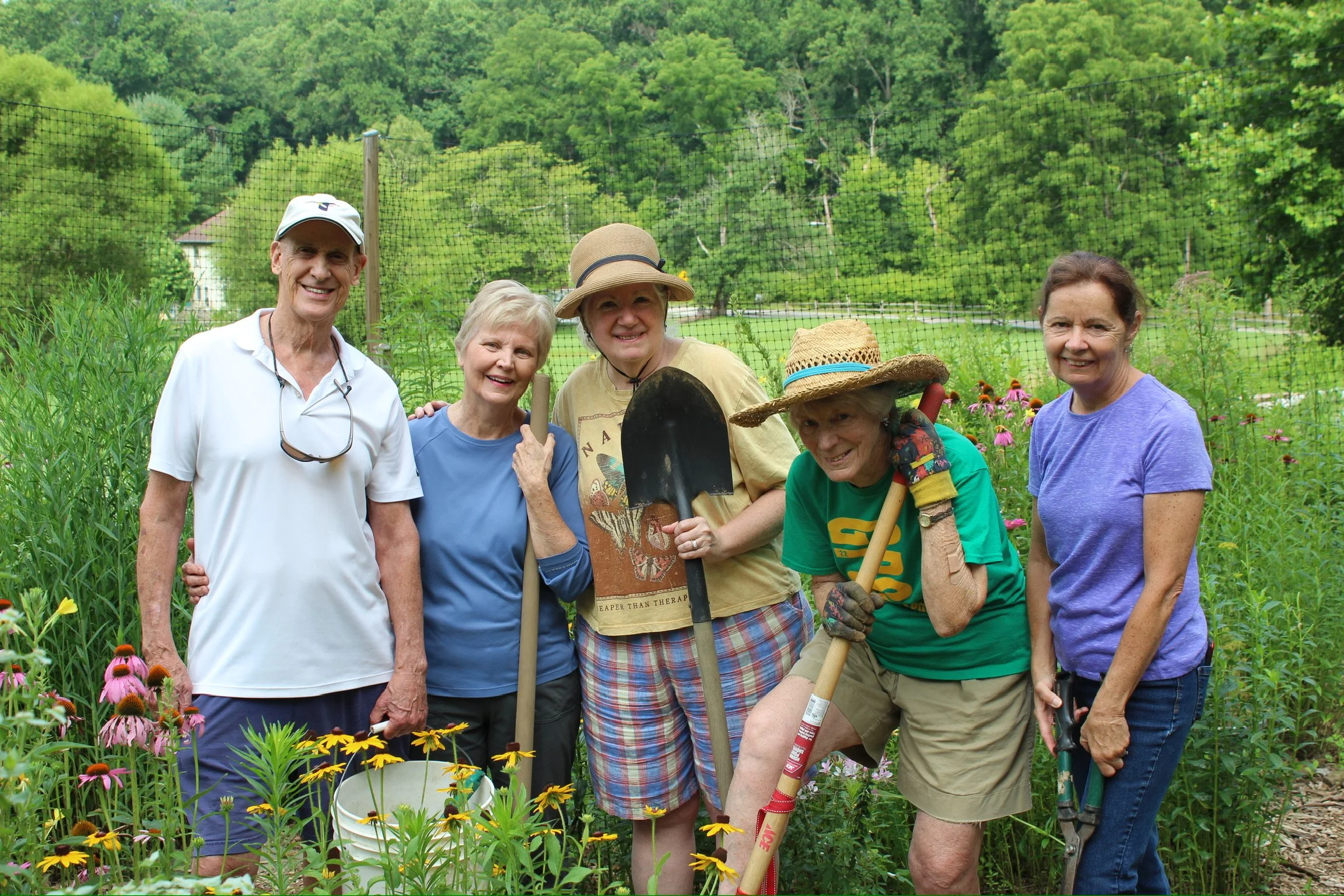
The Monarchs of the Glen (MOGS) Creation Care Ministry is a team of parishioners and friends of Immanuel Episcopal Church dedicated to stewardship of the church’s beautiful 11-acre campus.
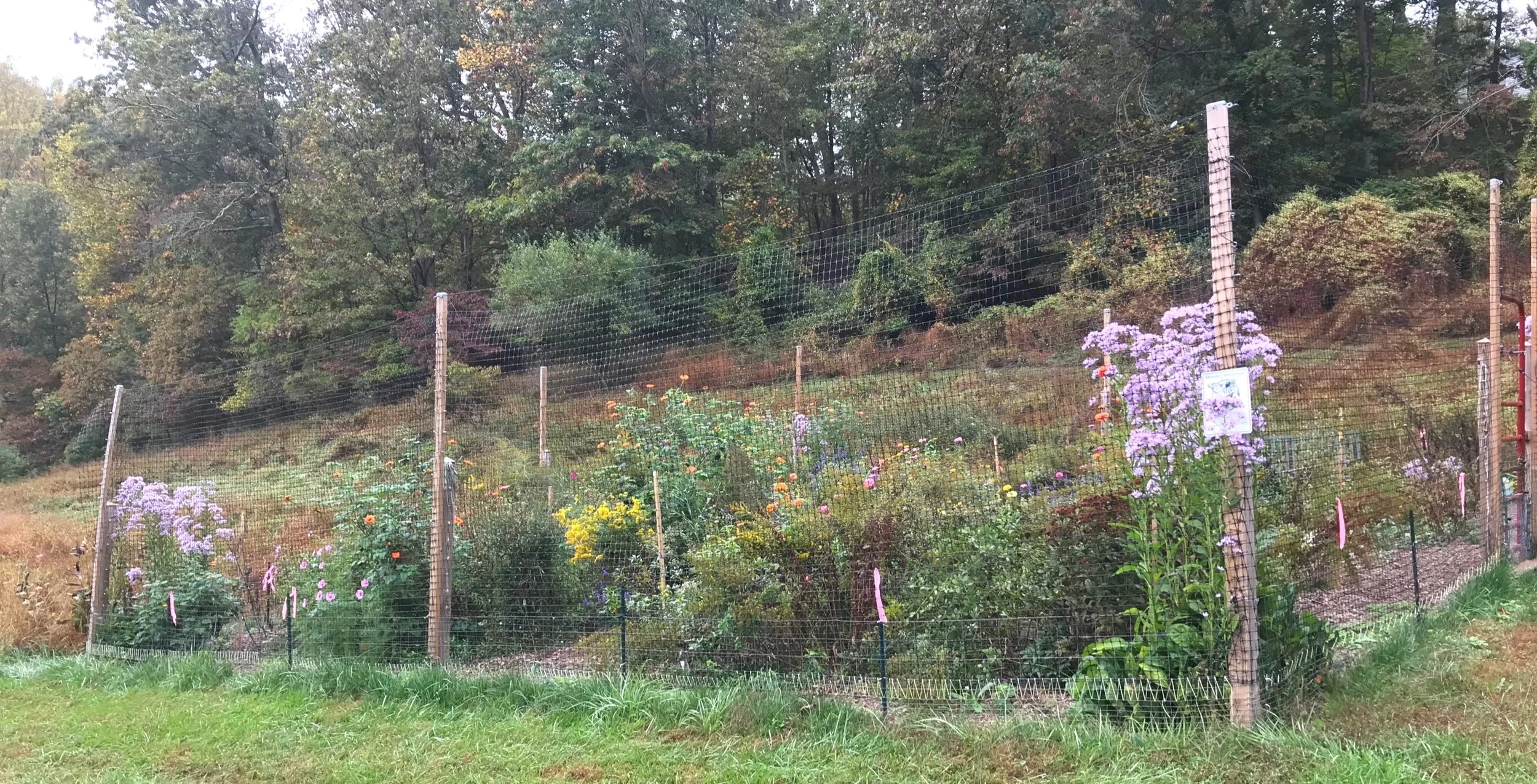
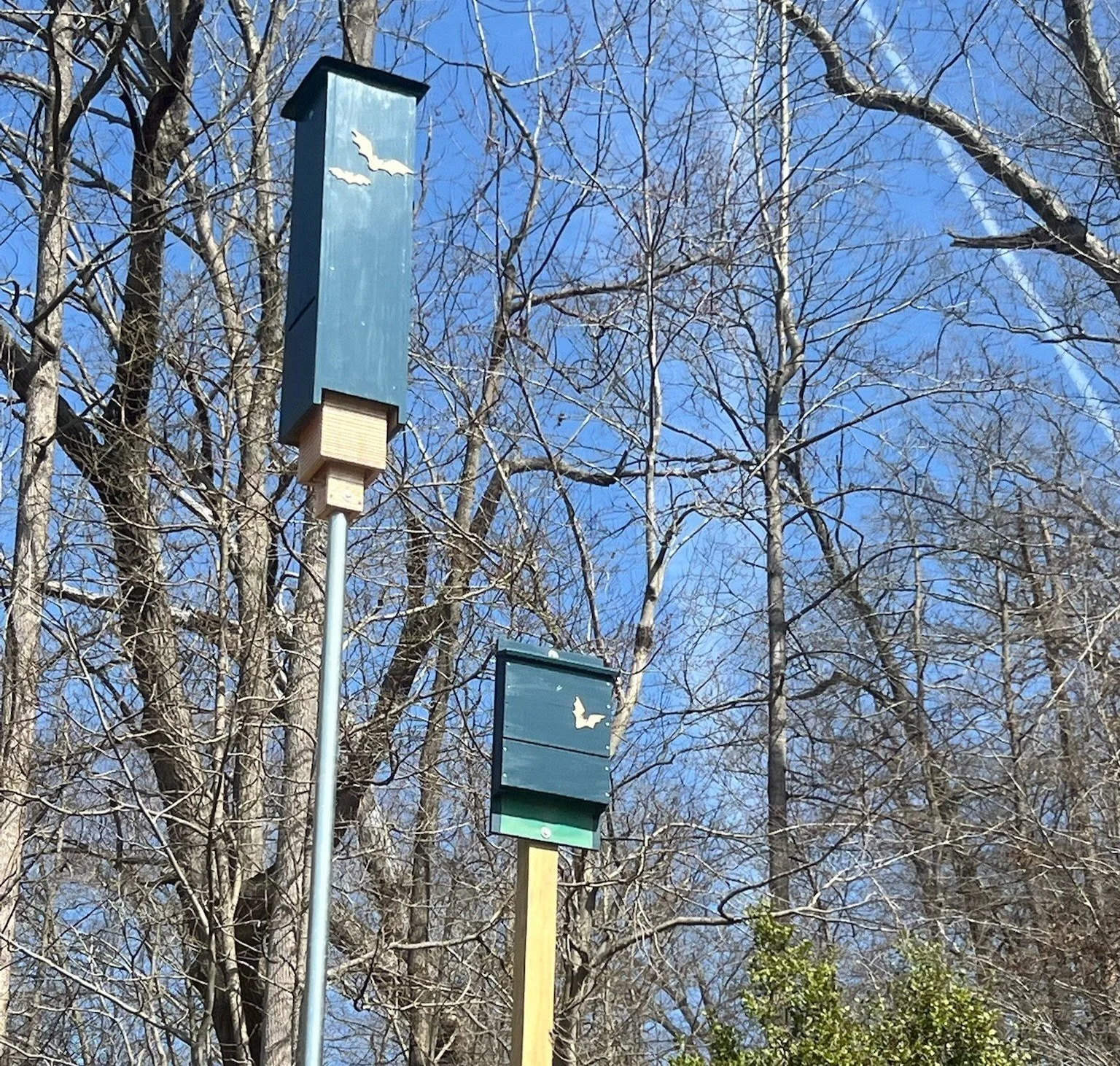
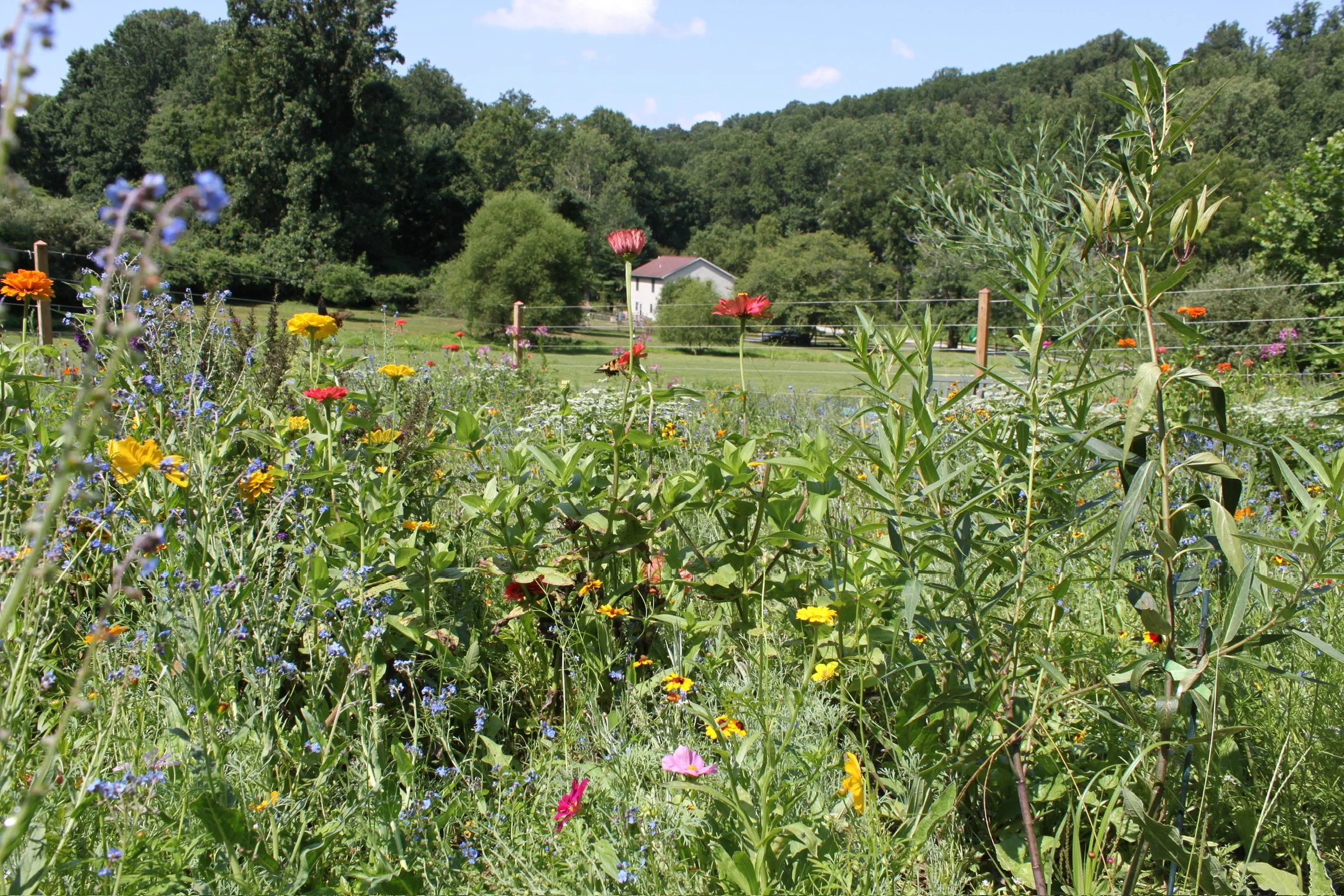
Our grounds include a cemetery, a wooded meditation garden, plantings around the church and parish hall, a fire pit gathering area, a playground, walking paths, and a meadow. Within the meadow, you will find:
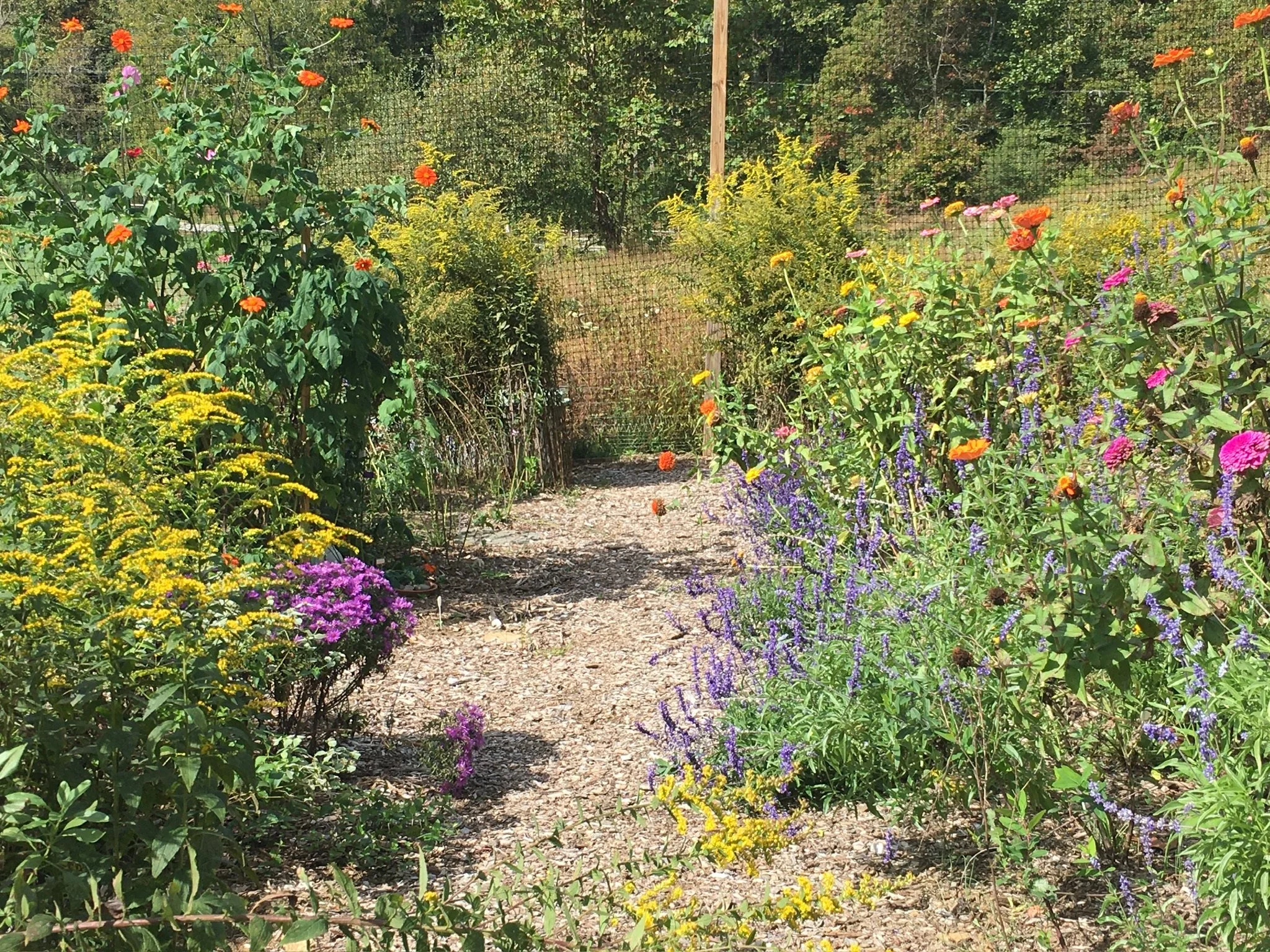
A 40' × 40' Monarch Waystation
A developing native pollinator meadow
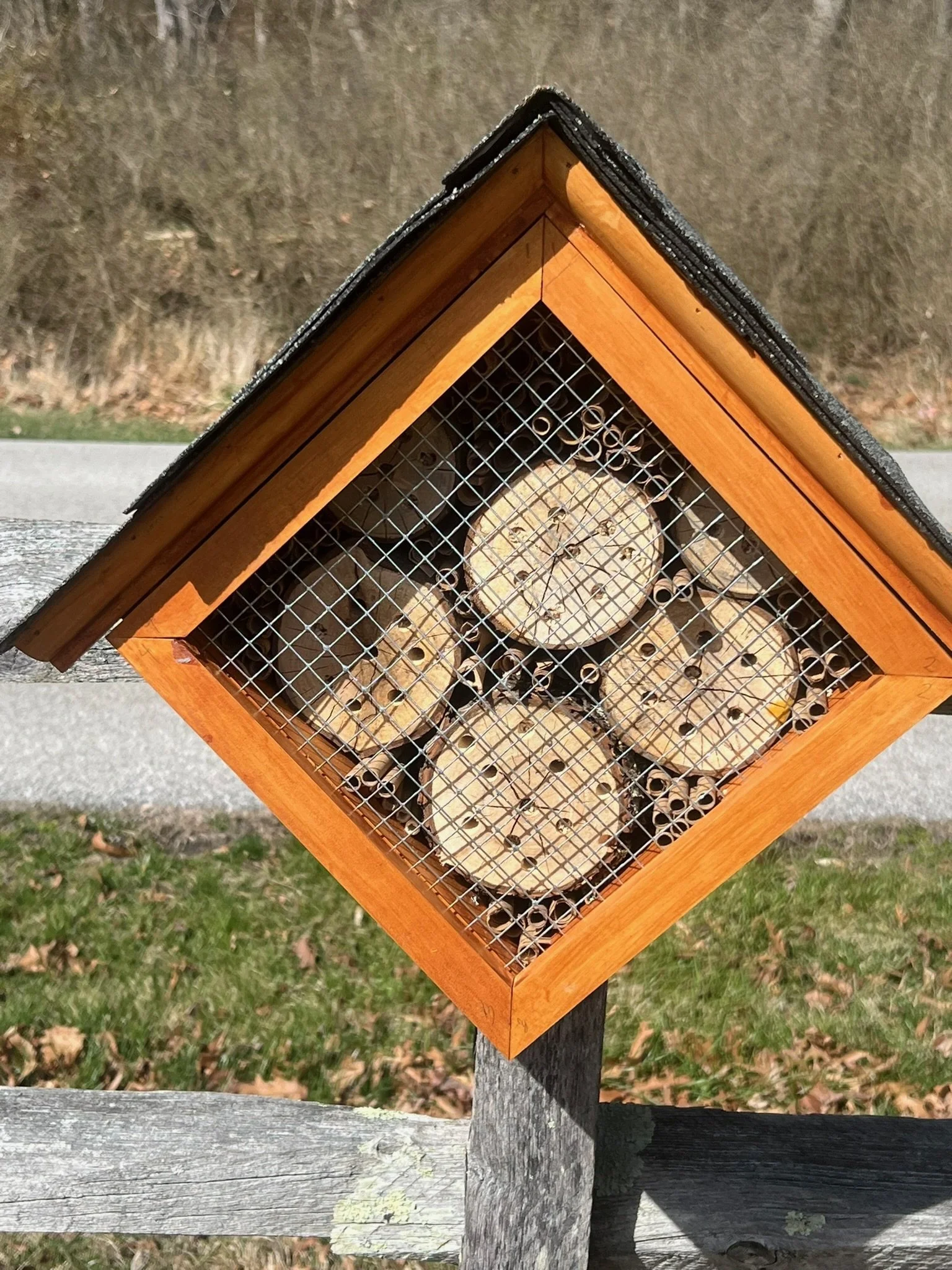
Solitary bee nesting boxes
Bat boxes
A bluebird trail extending into the cemetery and surrounding grounds
Together, these spaces create a habitat that supports pollinators, wildlife, and quiet reflection for our community.
Our Vision
In the beginning of our journey, we envisioned two phases to achieve our conservation goal to beautify our campus. The vision has grown and evolved toward a third phase, Creation Care Ministry.
Phase I, Create a Monarch Waystation
This phase is essentially complete. We continue our yearly weeding and maintenance of paths. Each year we experiment with adding different native plants to replace those that have failed to thrive in our environs. We also continue to transplant the most energetic deer-resistant plants out in the meadow.Phase II, Pollinator-friendly meadow
Phase II began in 2023. It is a joint effort of the Monarchs of the Glen team, Scout Troops 485 and 1485, and Cub Scout Pack 485. Our goal is to turn the nearly an acre of land surrounding the fenced garden into a healthy, pollinator-friendly meadow. We have been experimenting with different ways to accomplish this via mass seeding and transplanting. In 2025-26, we will concentrate on eliminating invasive plants and planting flowering native shrubs and some trees, along with common milkweed, goldenrod, and hardy perennials.Phase III, Creation Care Ministry
Creation Care Ministry for the entire Immanuel Campus. In 2023, we became a member church in Interfaith Partners of the Chesapeake (IPC). This partnership was instrumental in our decision to expand our efforts to remove invasive plants in other areas of our campus, replacing them with native shrubs and trees in the coming years.
Our Journey
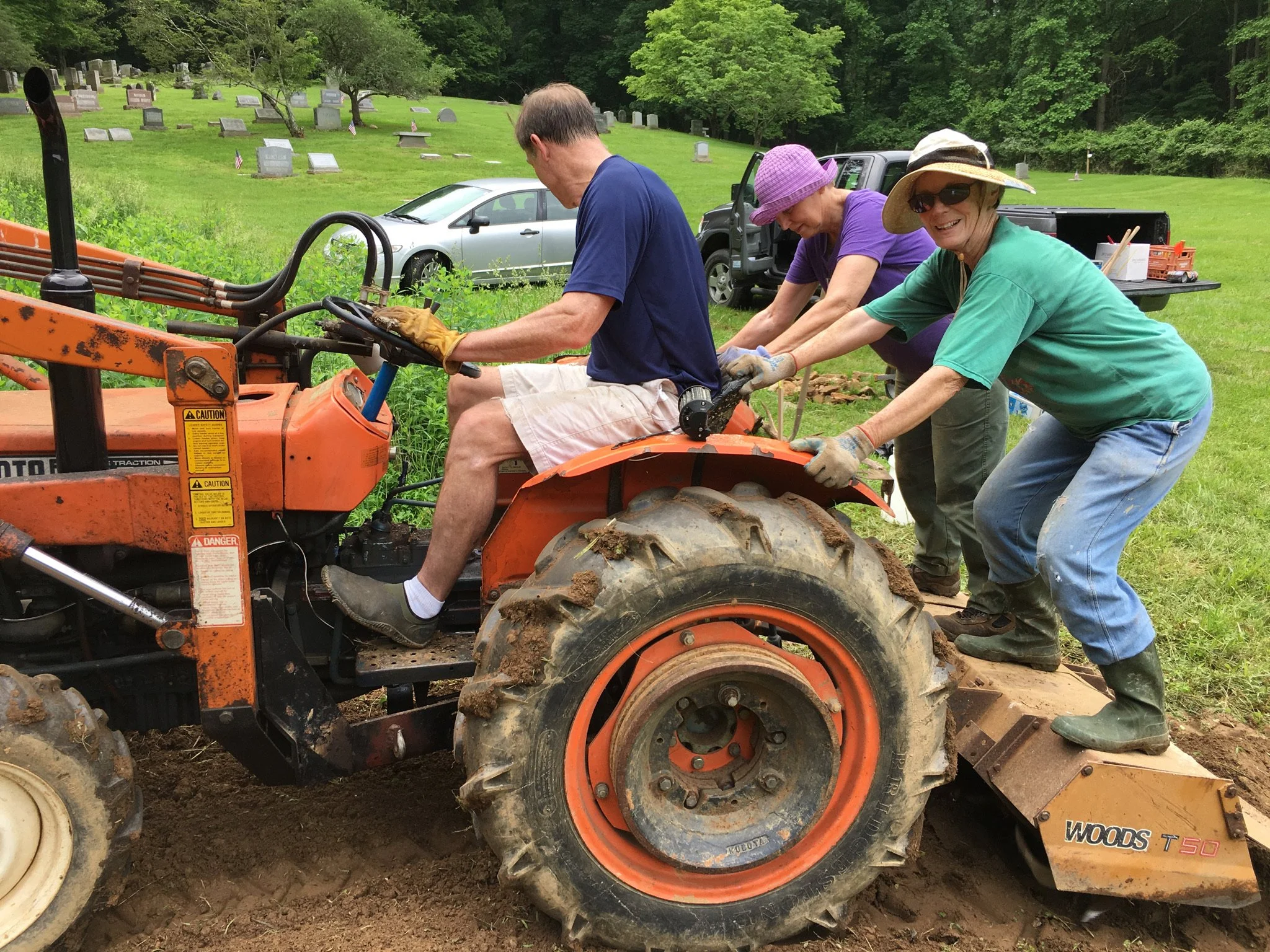
In 2013, as part of our ongoing efforts to beautify the campus, an idea was shared and embraced: to transform a small portion of an unused, overgrown meadow into a Monarch Waystation, a native plant garden designed to attract and support monarchs and other pollinators. Like the monarch, our journey has been long and arduous—more complicated than we first imagined—but also deeply rewarding. Over the course of several years, parishioners and friends of Immanuel dedicated time and energy to researching monarchs and native plants, fundraising, and visiting other pollinator gardens to learn from their example. After identifying a sunny, well-drained space, we solarized the area over two seasons to eliminate weeds and invasive plants, then tilled the soil and enriched it with horse manure. The space was divided into four quadrants with walkways, and with the help of an Eagle Scout, a fence was constructed to protect the garden from deer and other mammals. At last, in May of 2019, we celebrated our first planting day in a 40’ x 40’ garden space. Since then, the Monarch Waystation has become a flourishing habitat and a source of fellowship, learning, and joy for all who visit.
What Is a Monarch Waystation?
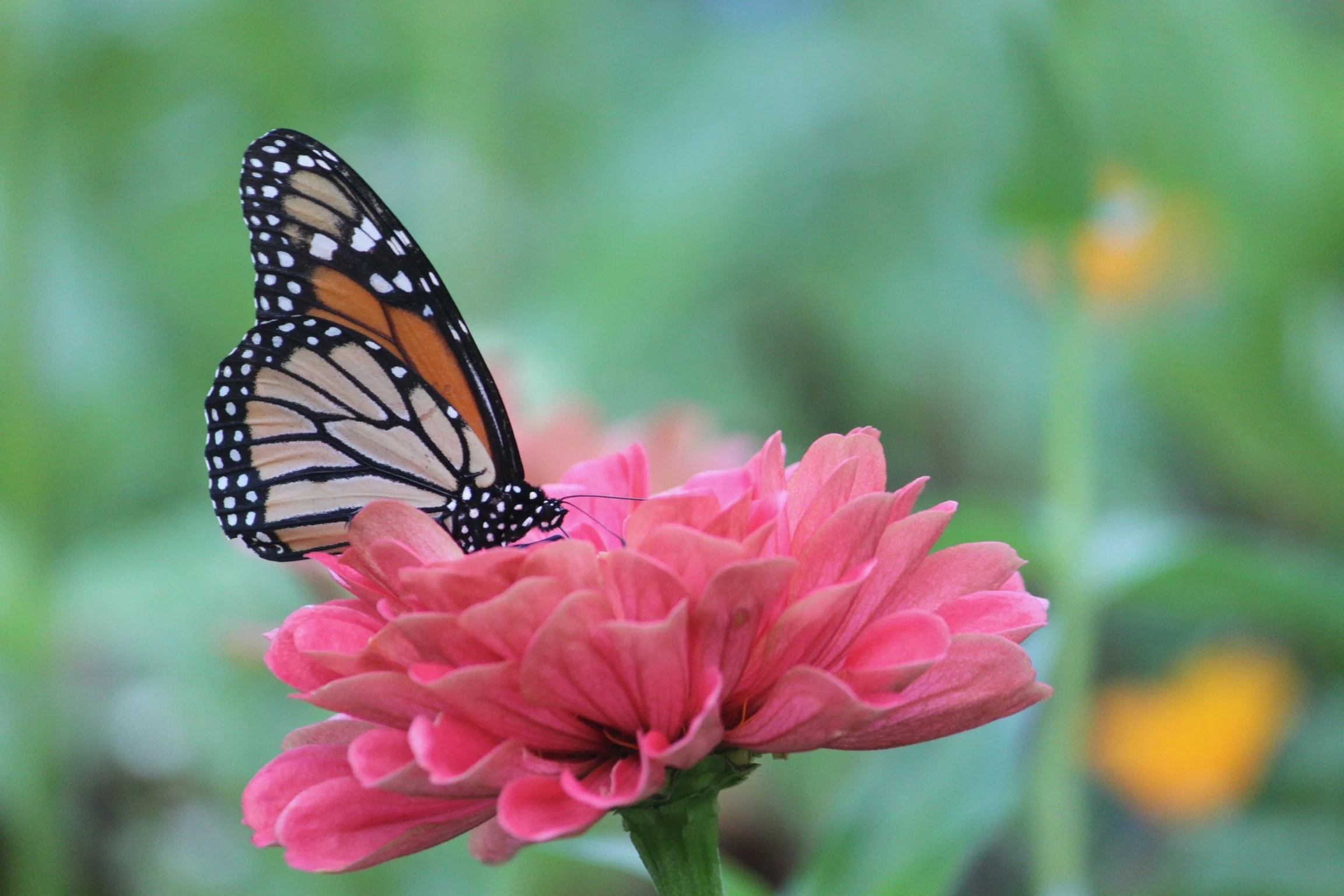
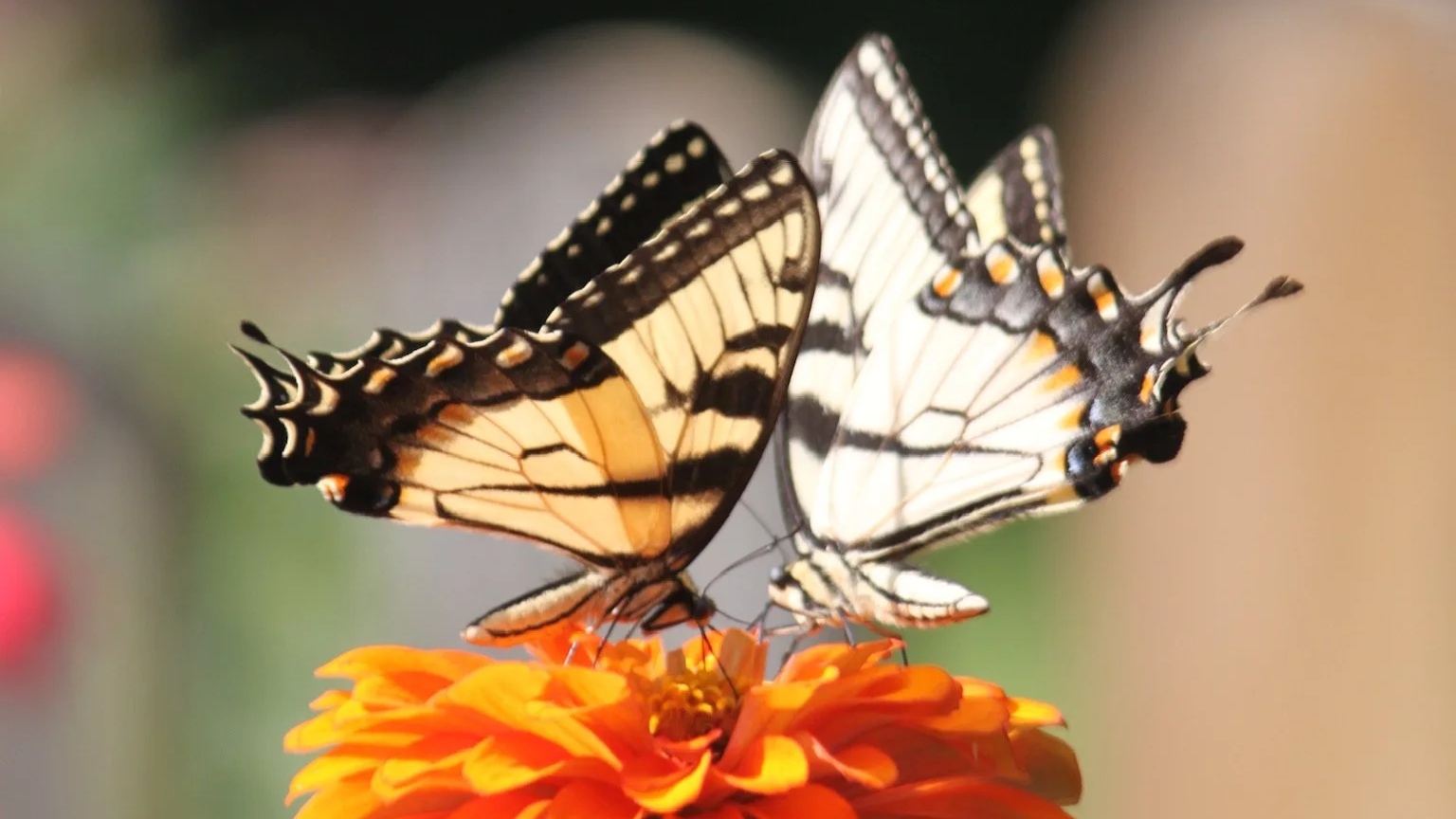
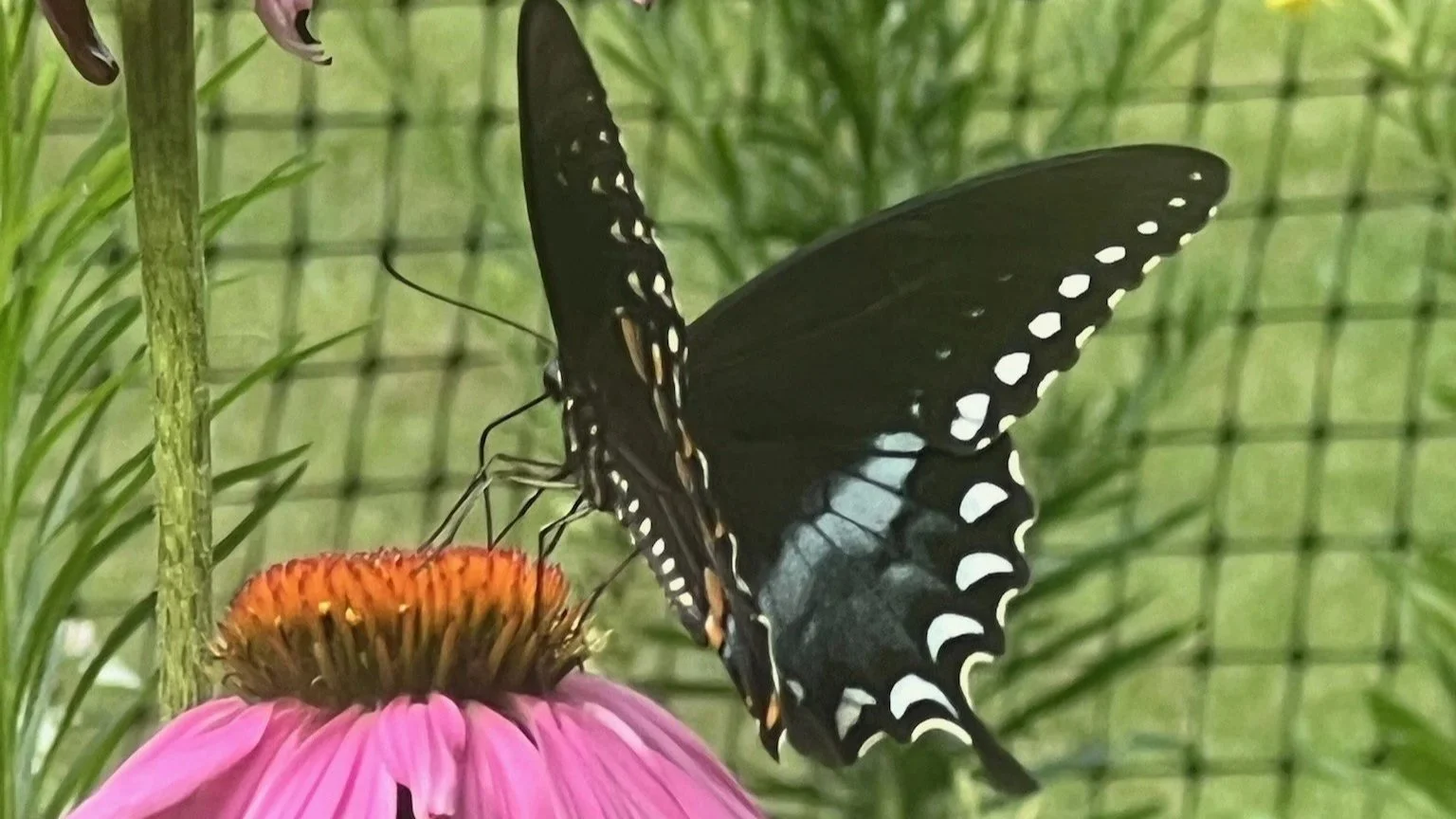
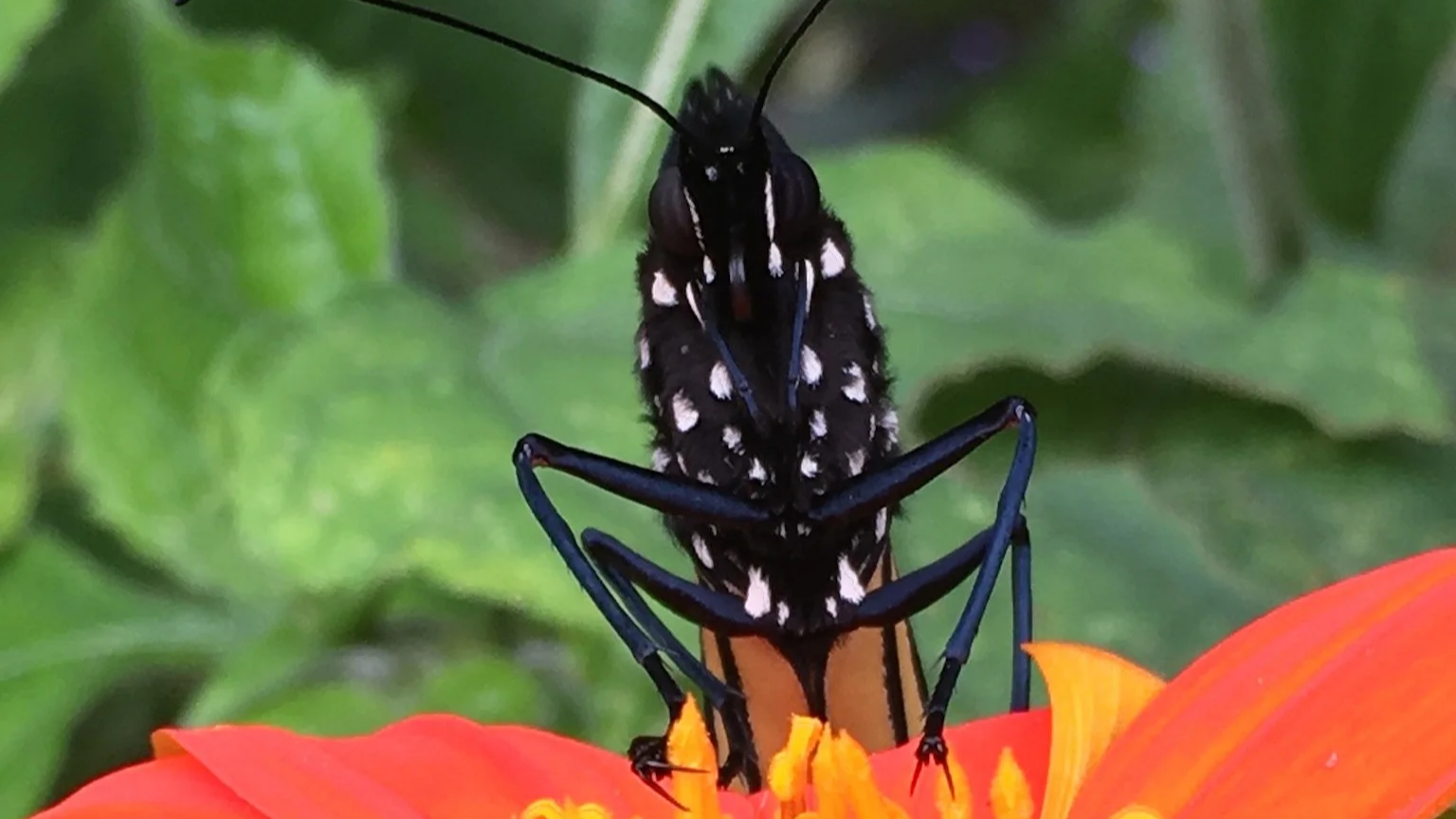
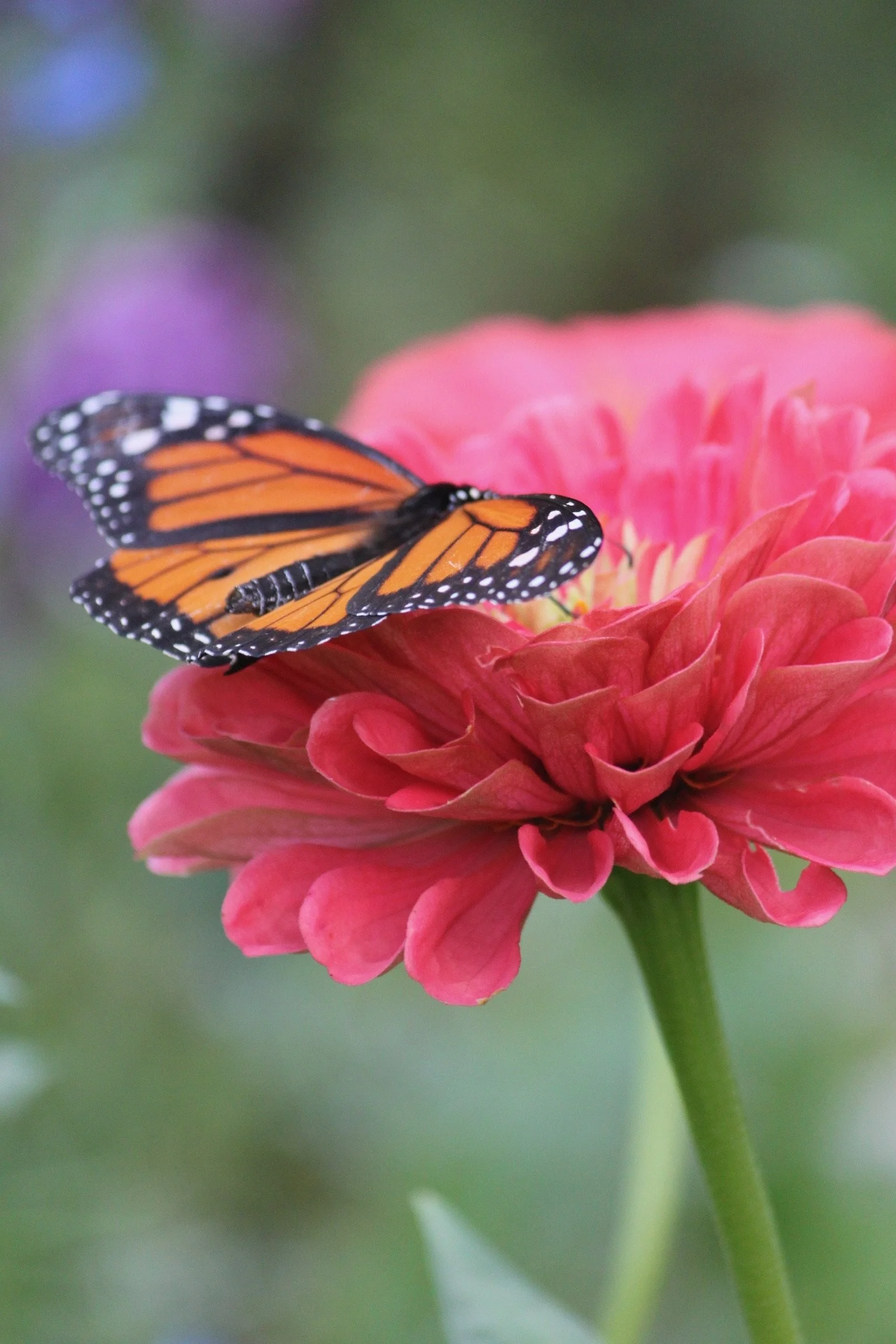
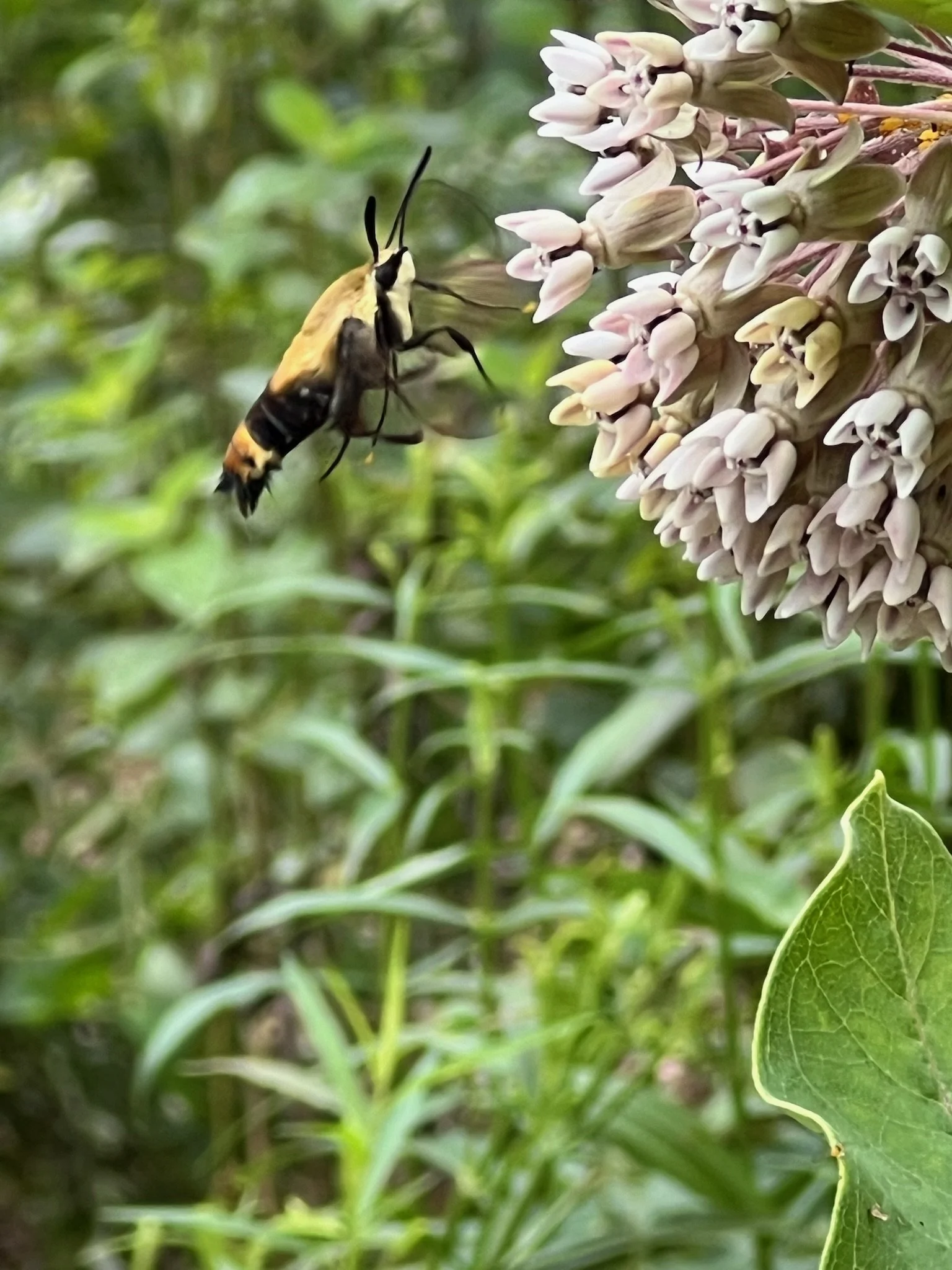
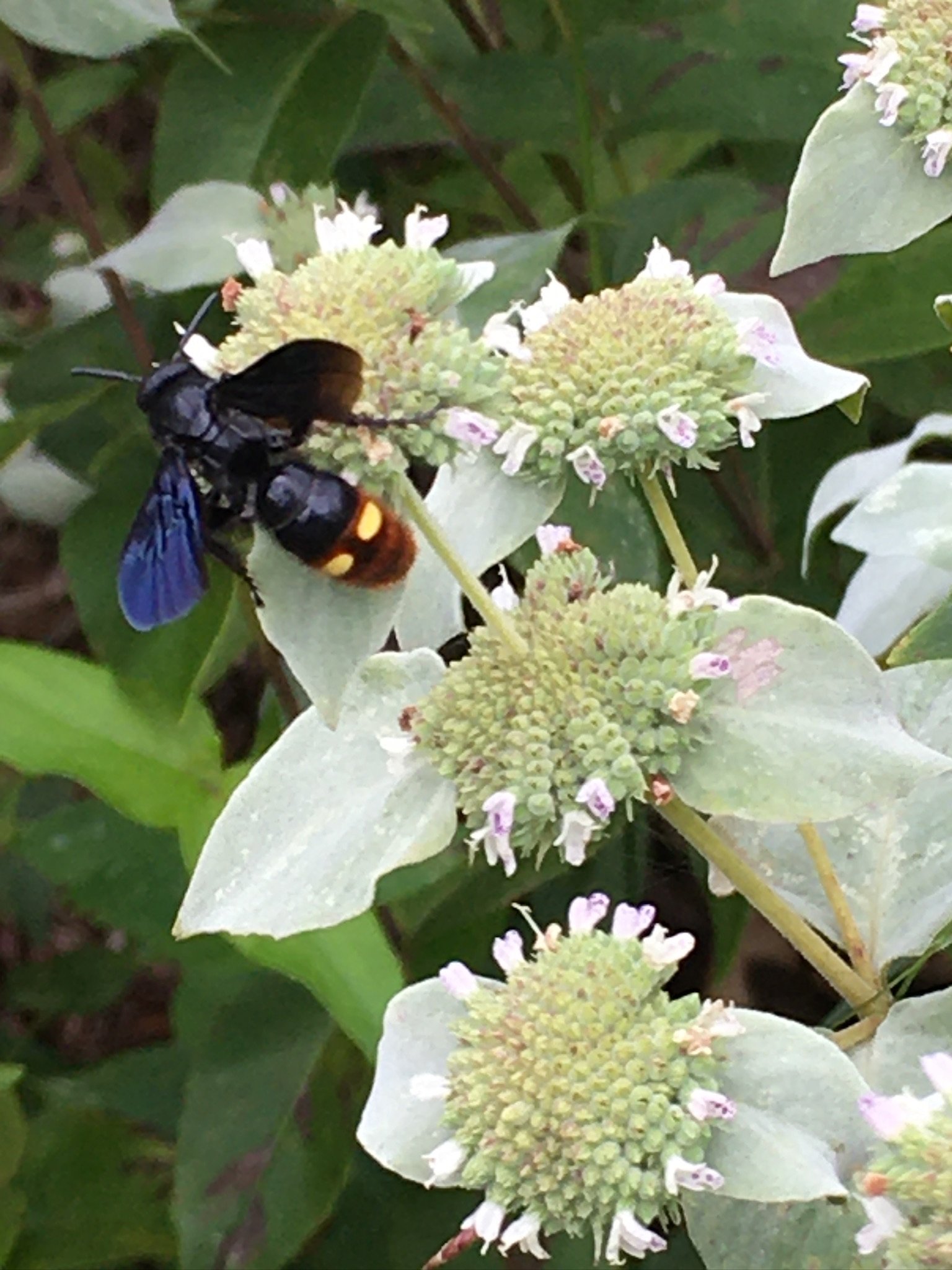
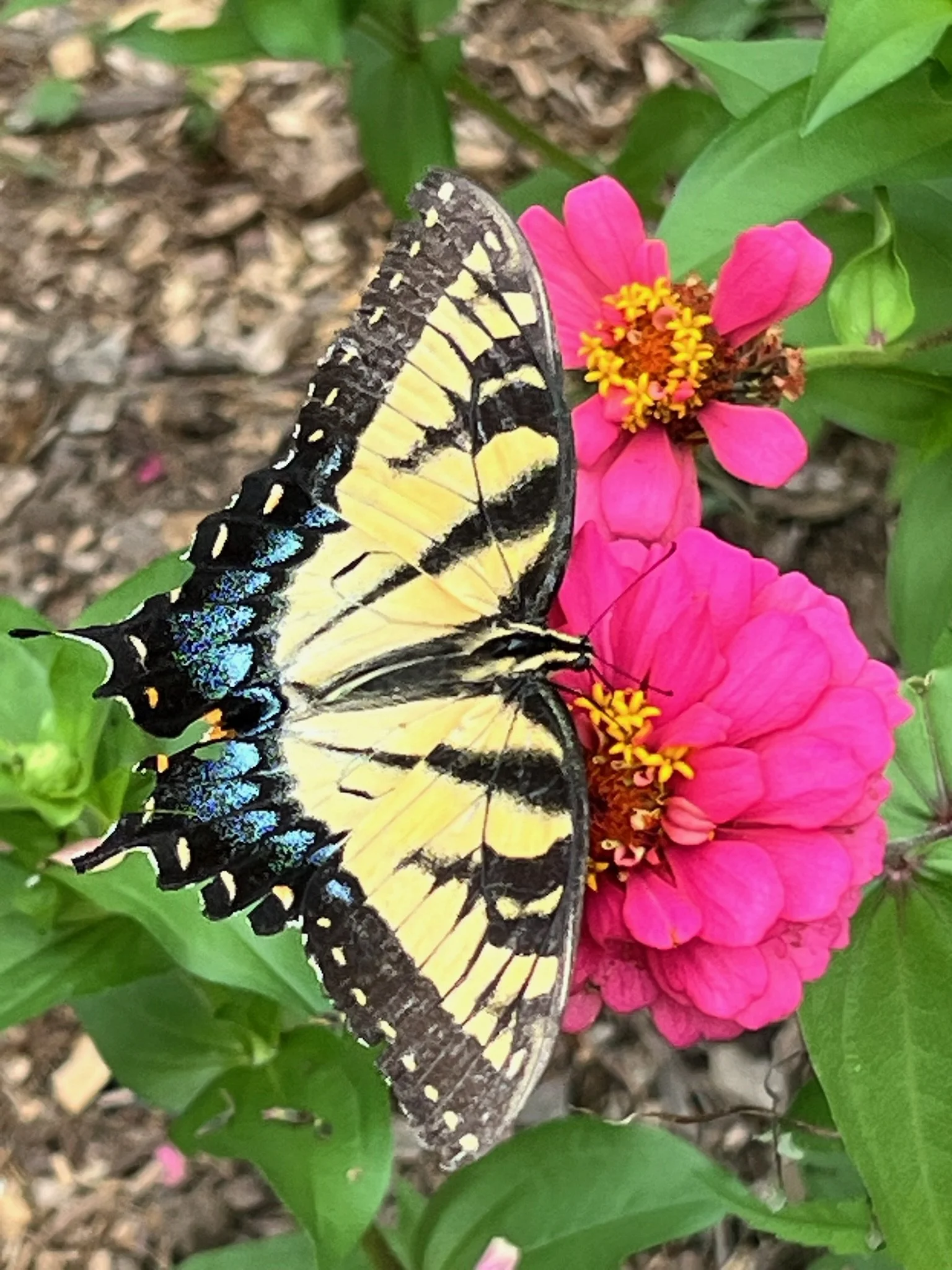
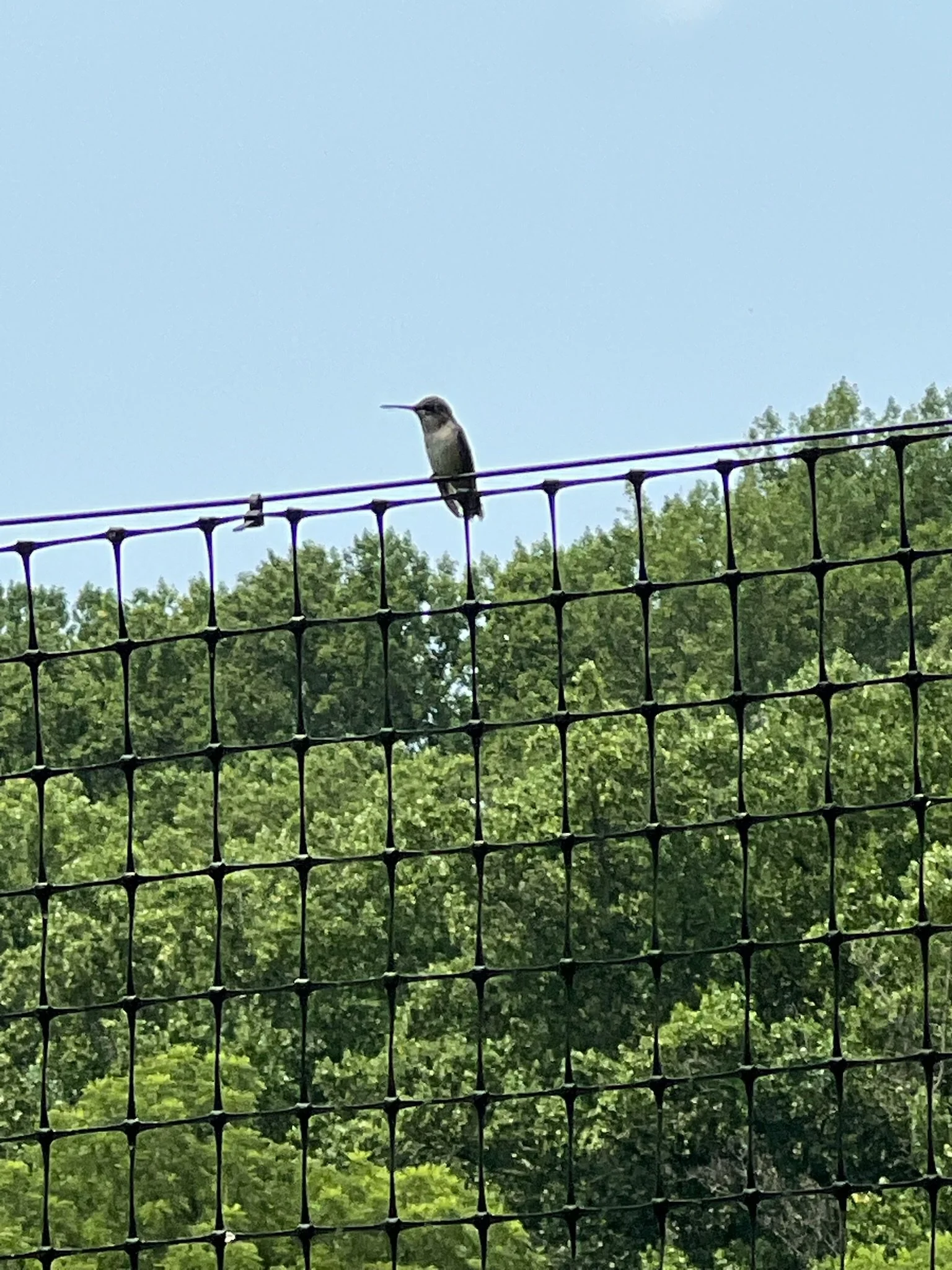
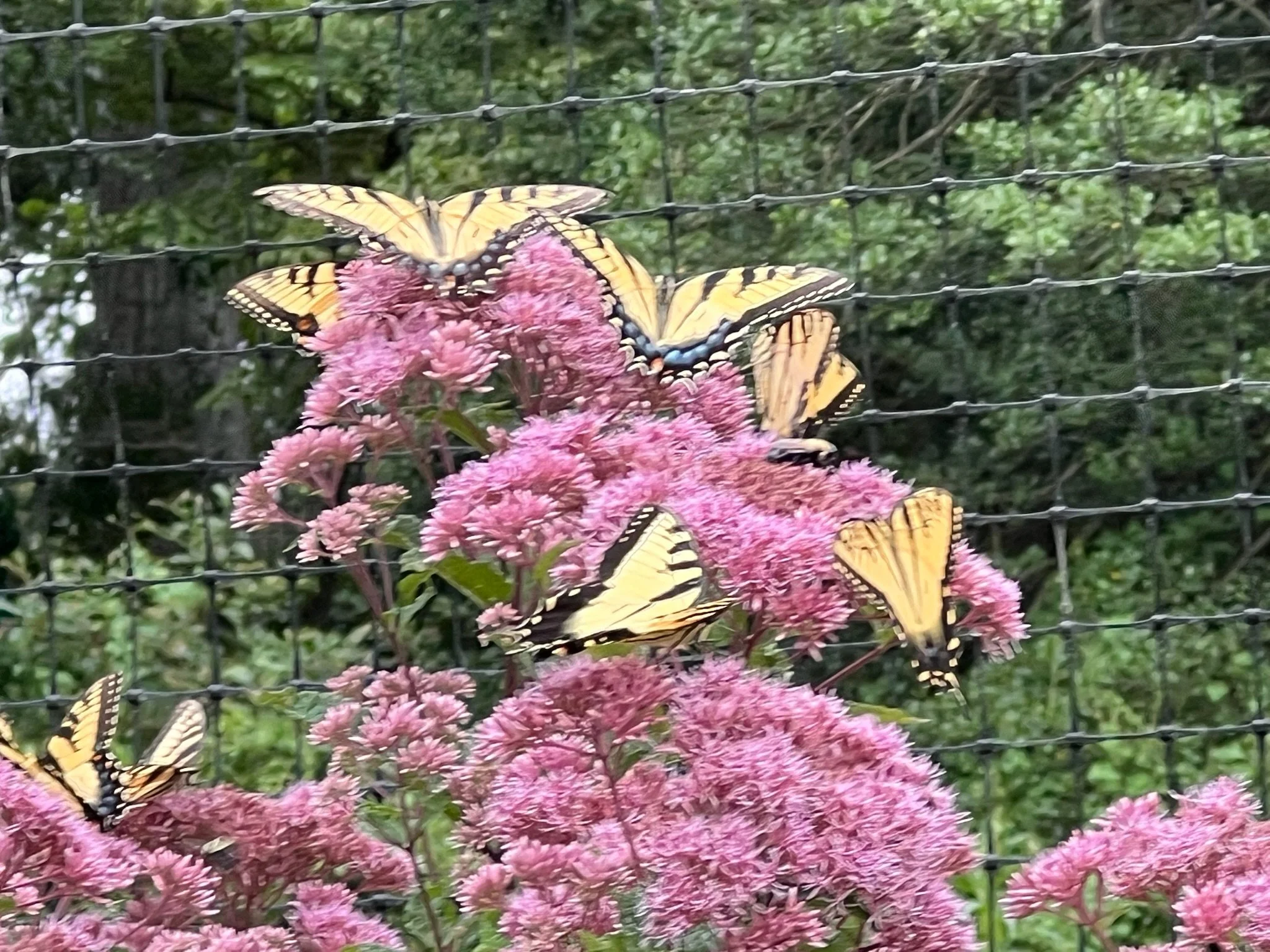
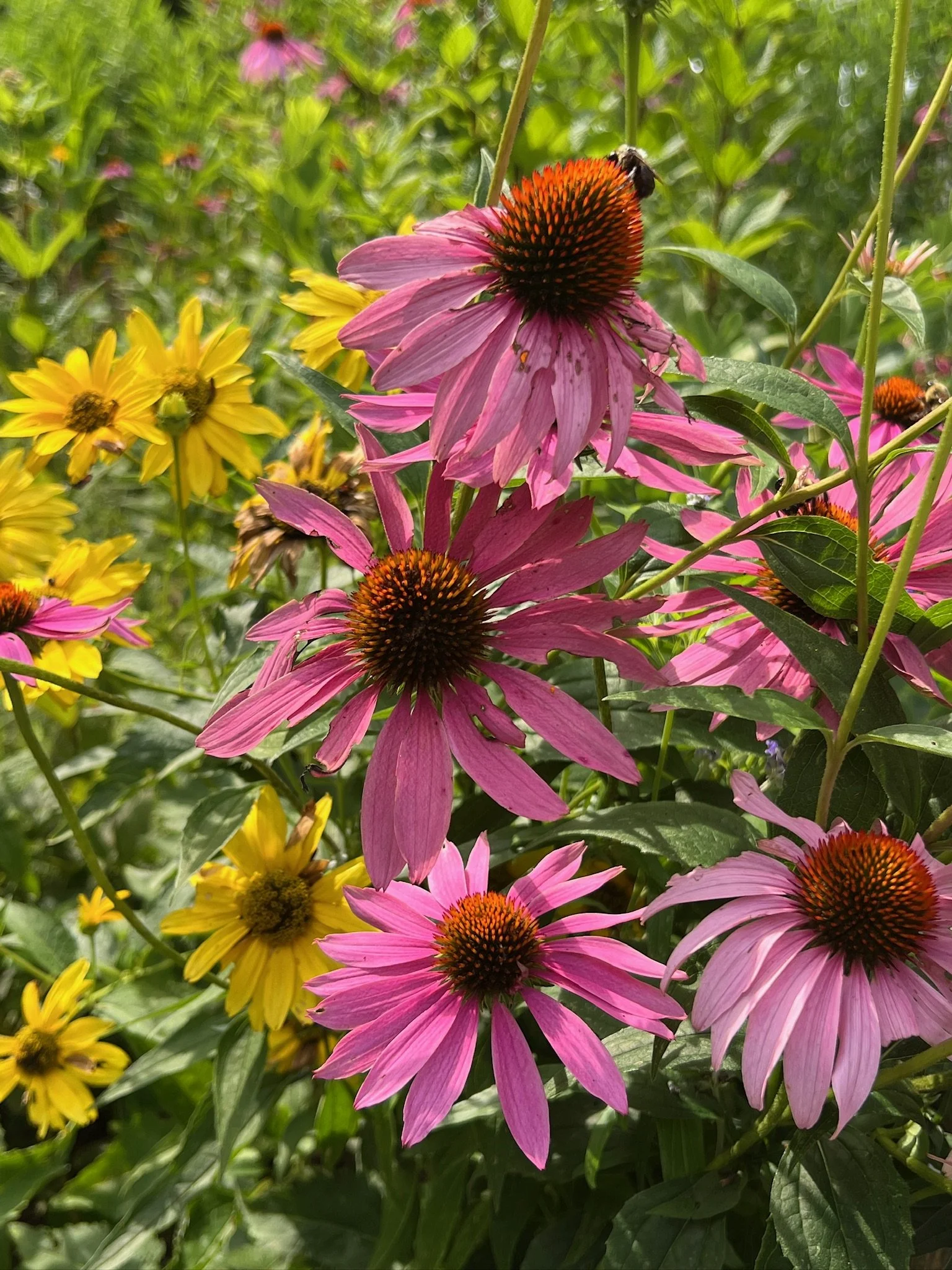
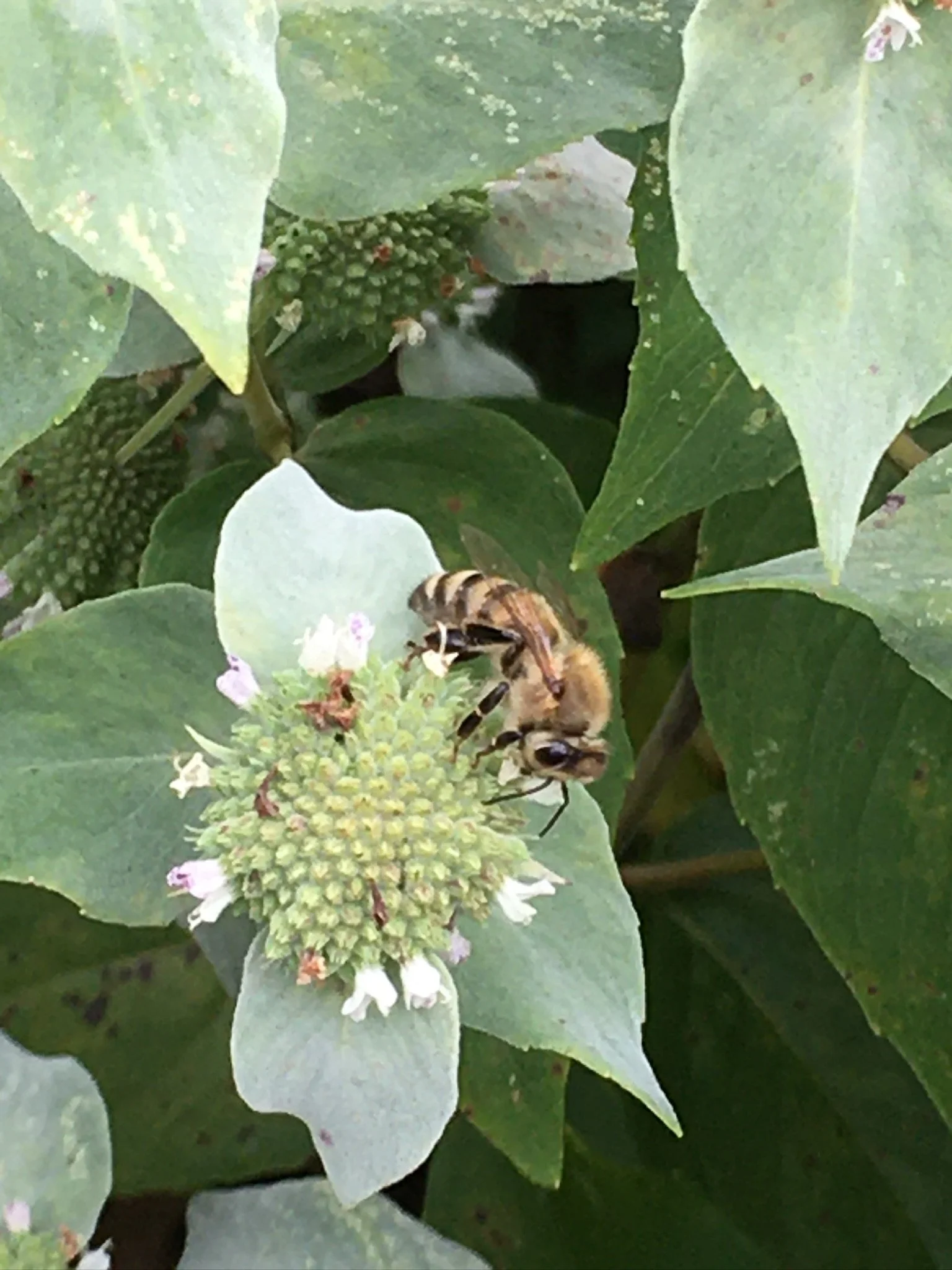
A Monarch Waystation is a pollinator-friendly garden that is planted specifically with different species of milkweed and nectar plants (flowering perennials, shrubs, trees, and recommended annual flowers) native to the area (one’s region within one’s state) to provide a nutritional food source and safe habitat that supports the life cycle of the monarch butterfly (Danaus plexippus) and other pollinators: bees, butterflies, wasps, beetles, flies, bats, and birds.
To learn more about Monarch Waystations, the life cycle of the Monarch, and native plants, check out the details below:
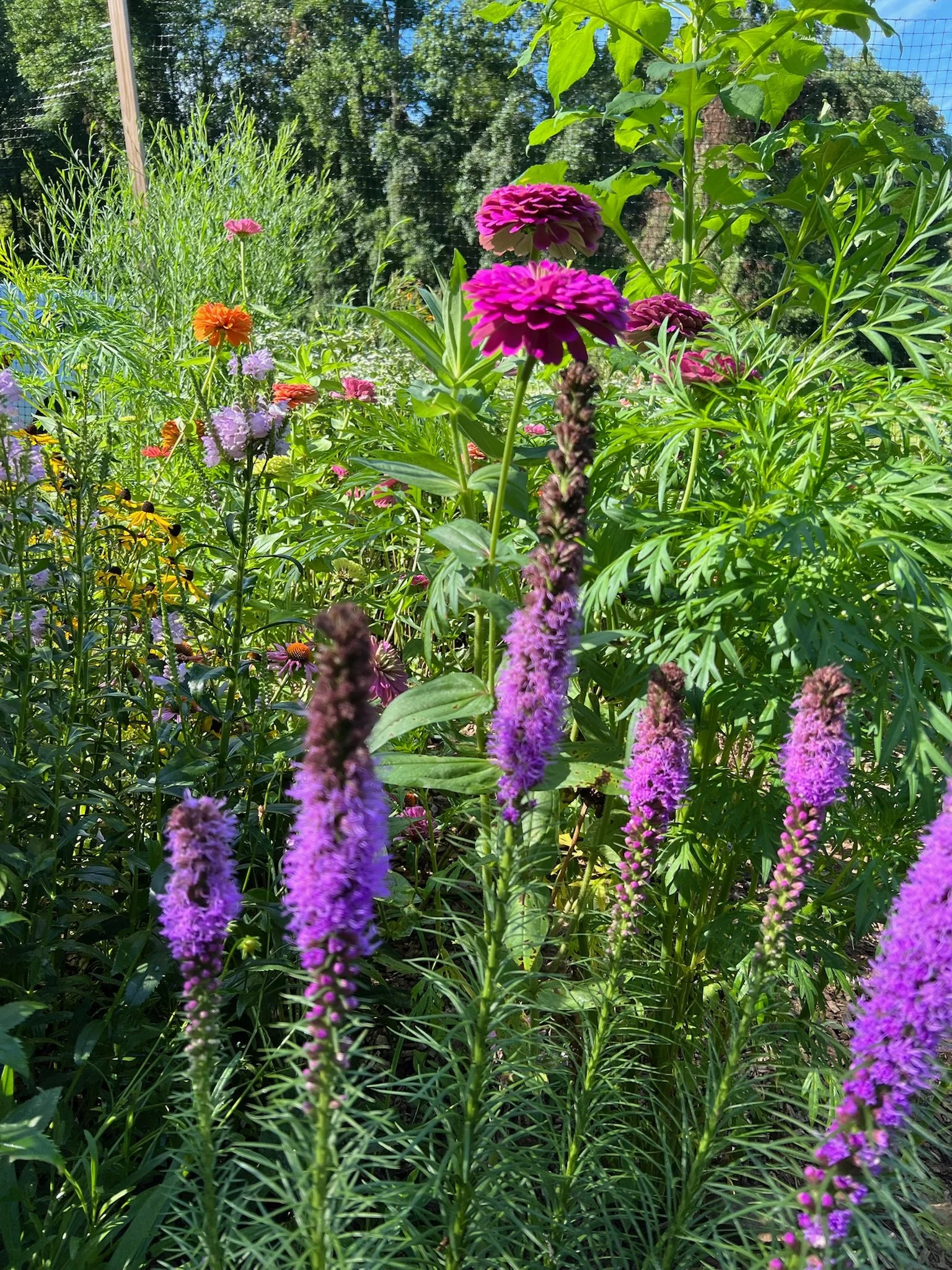
A Monarch Waystation is quite different from a conventional garden that features showy, cultivated plants that beautify an area, but are of little nutritional value to native pollinators. A Monarch Waystation provides a nutritional nectar food source and a safe shelter for all native pollinators by using only native milkweed, native flowering perennials, native flowering shrubs and trees, and recommended annuals.
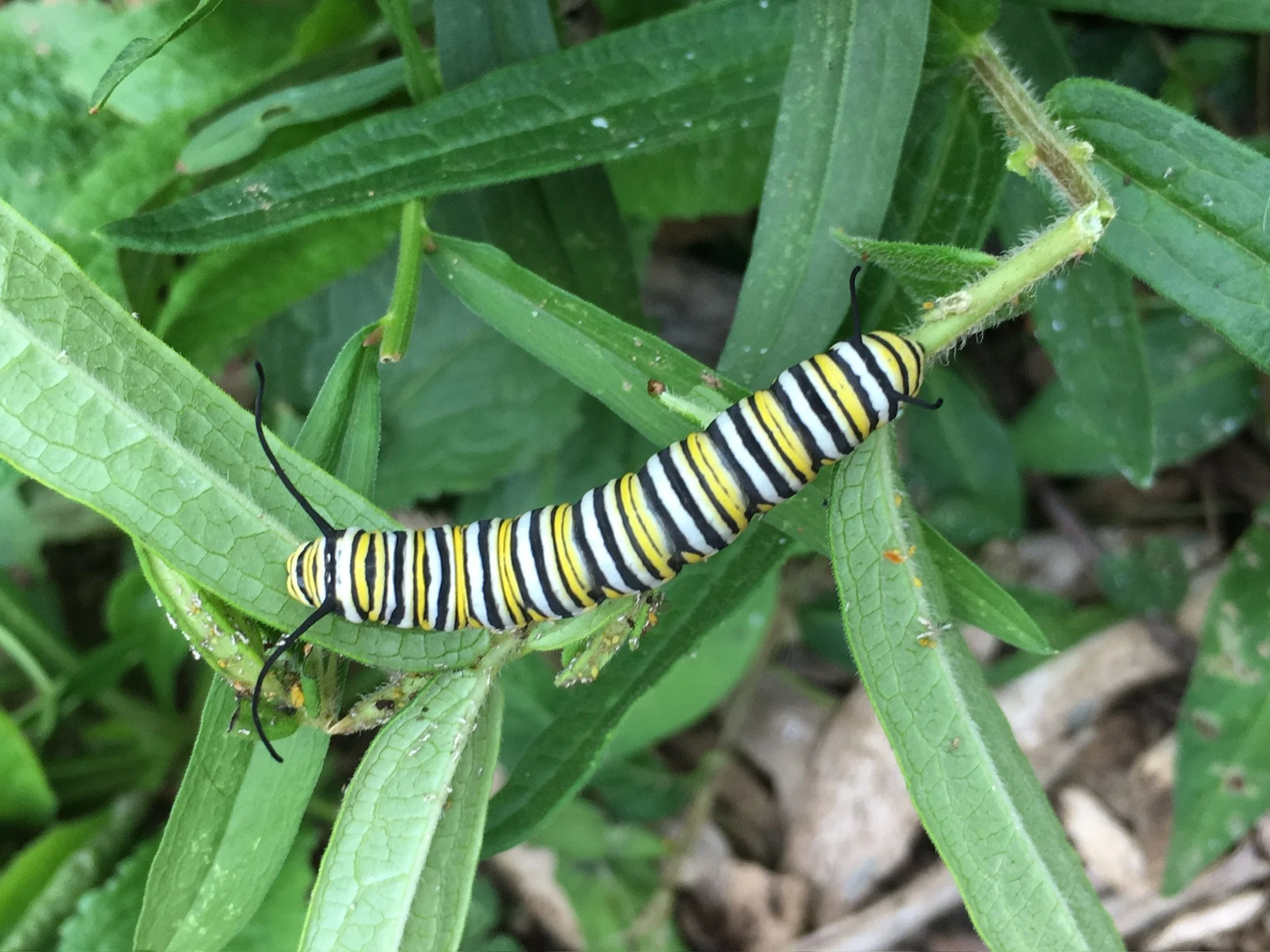
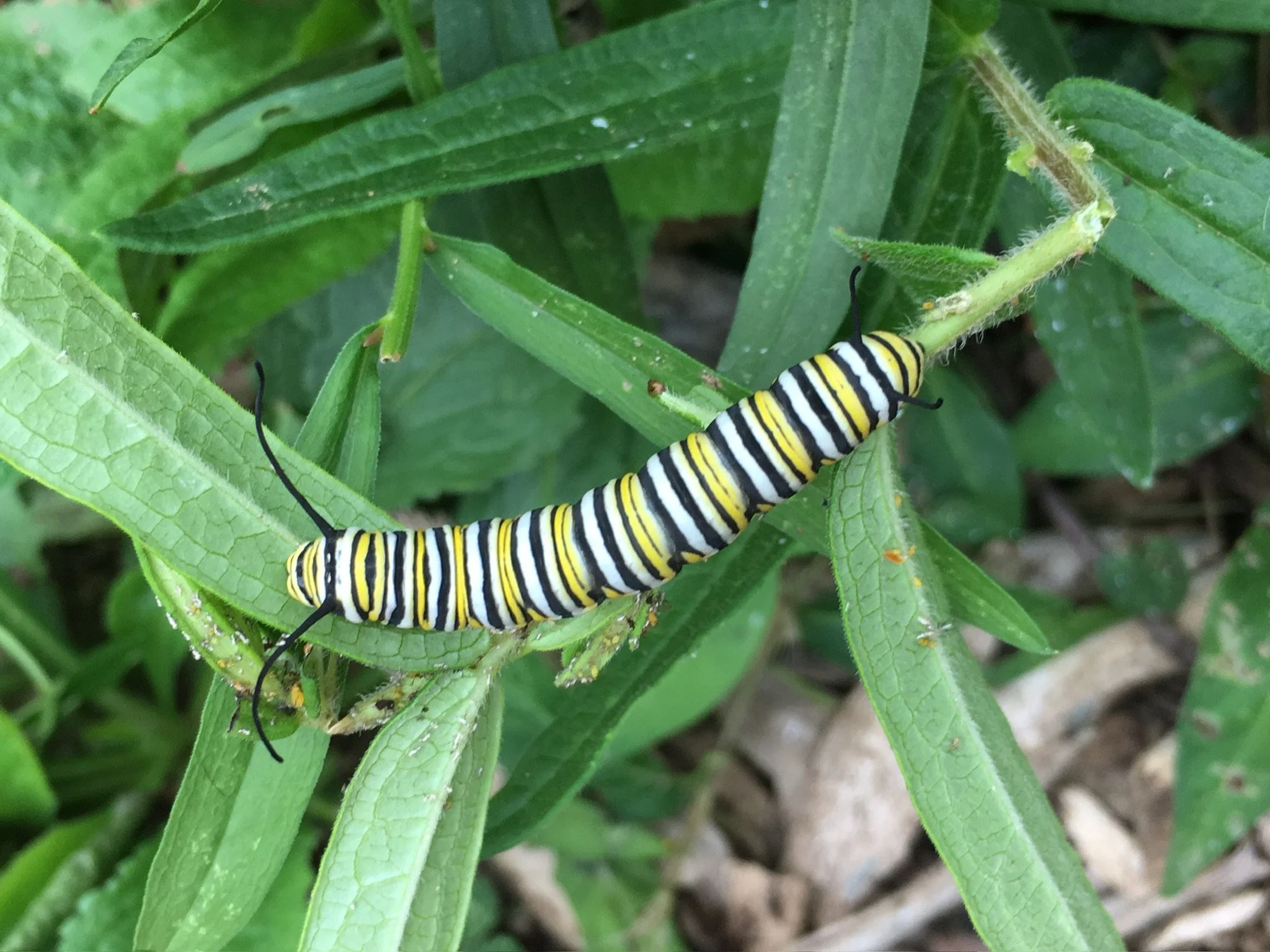
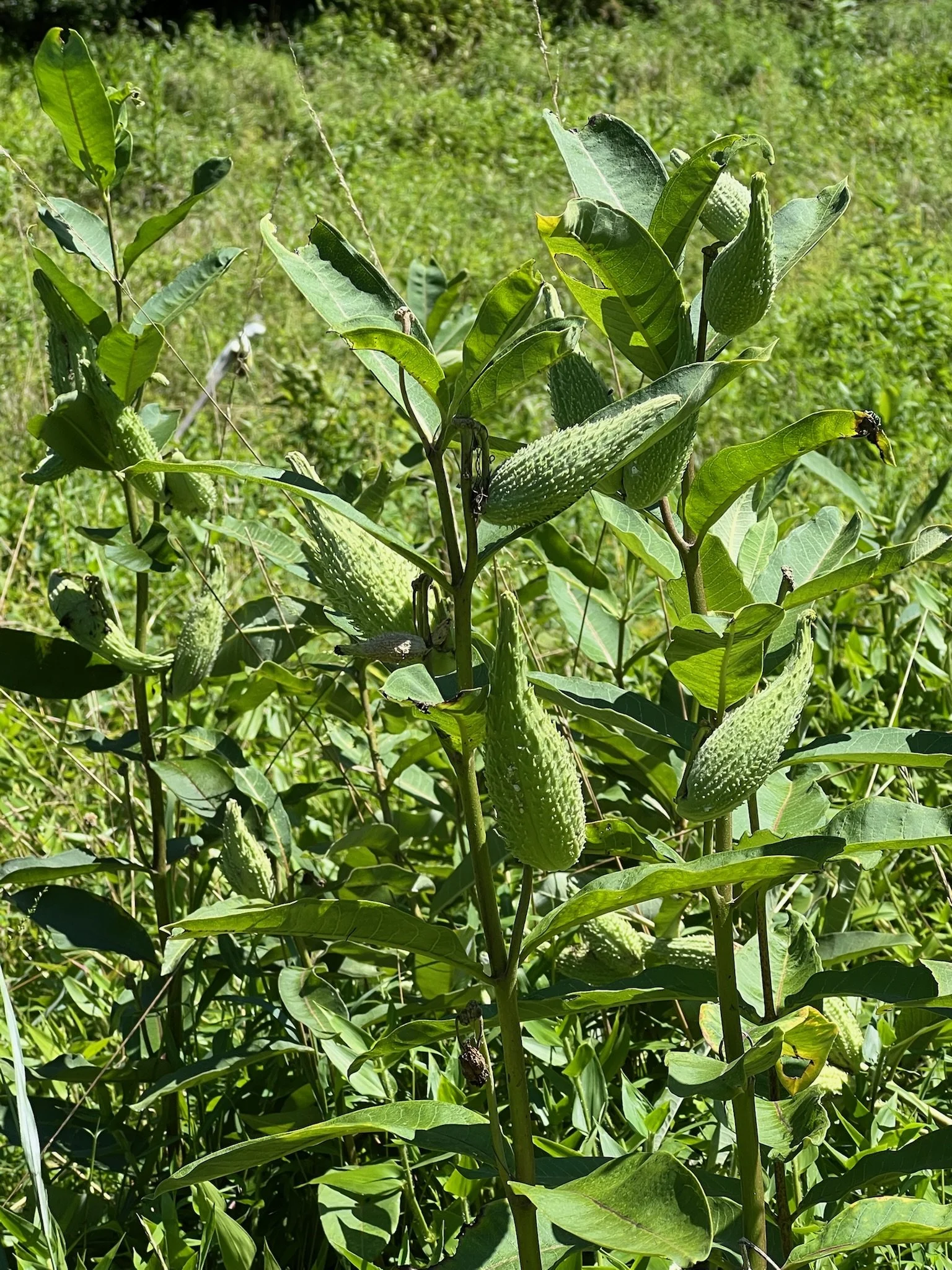
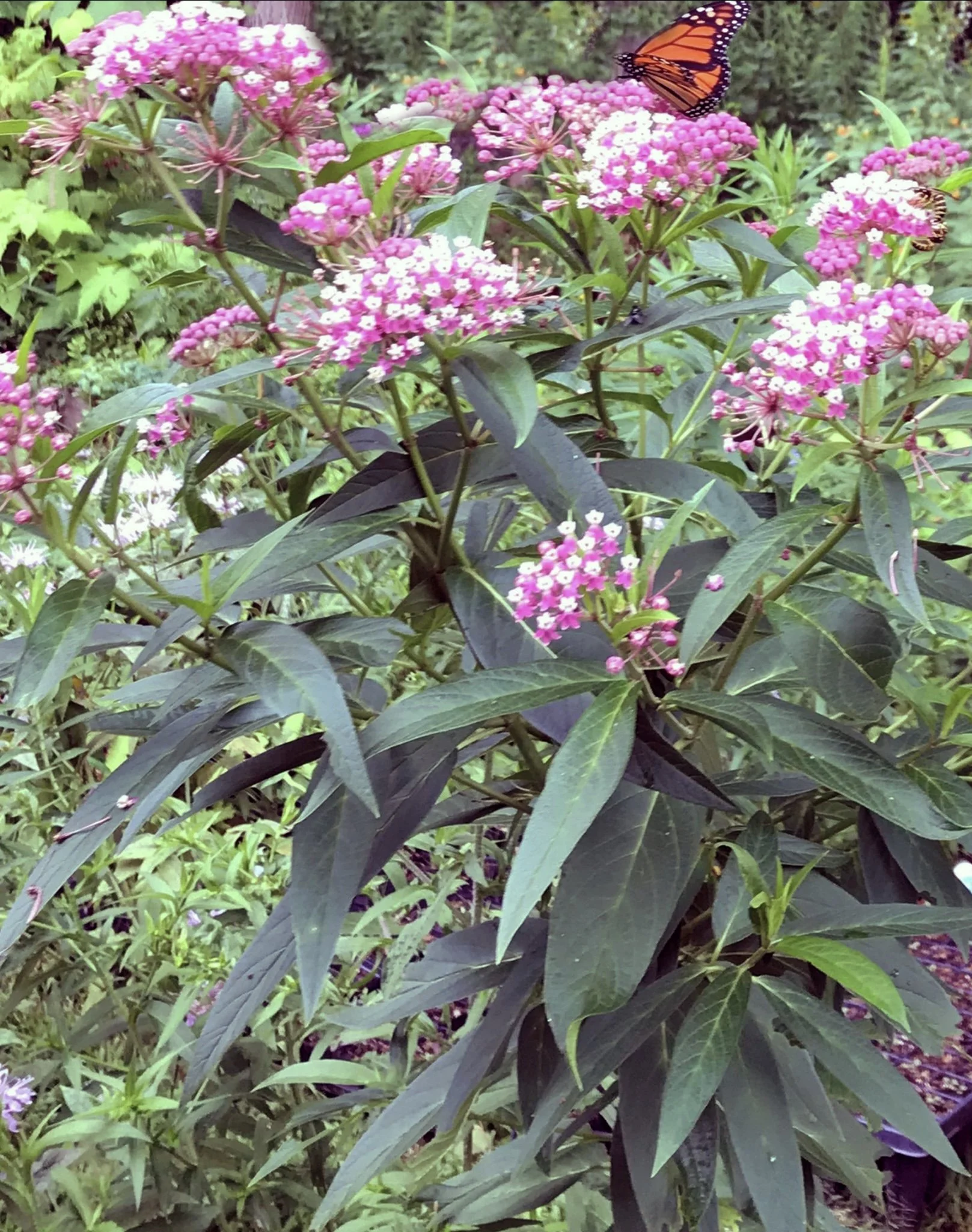
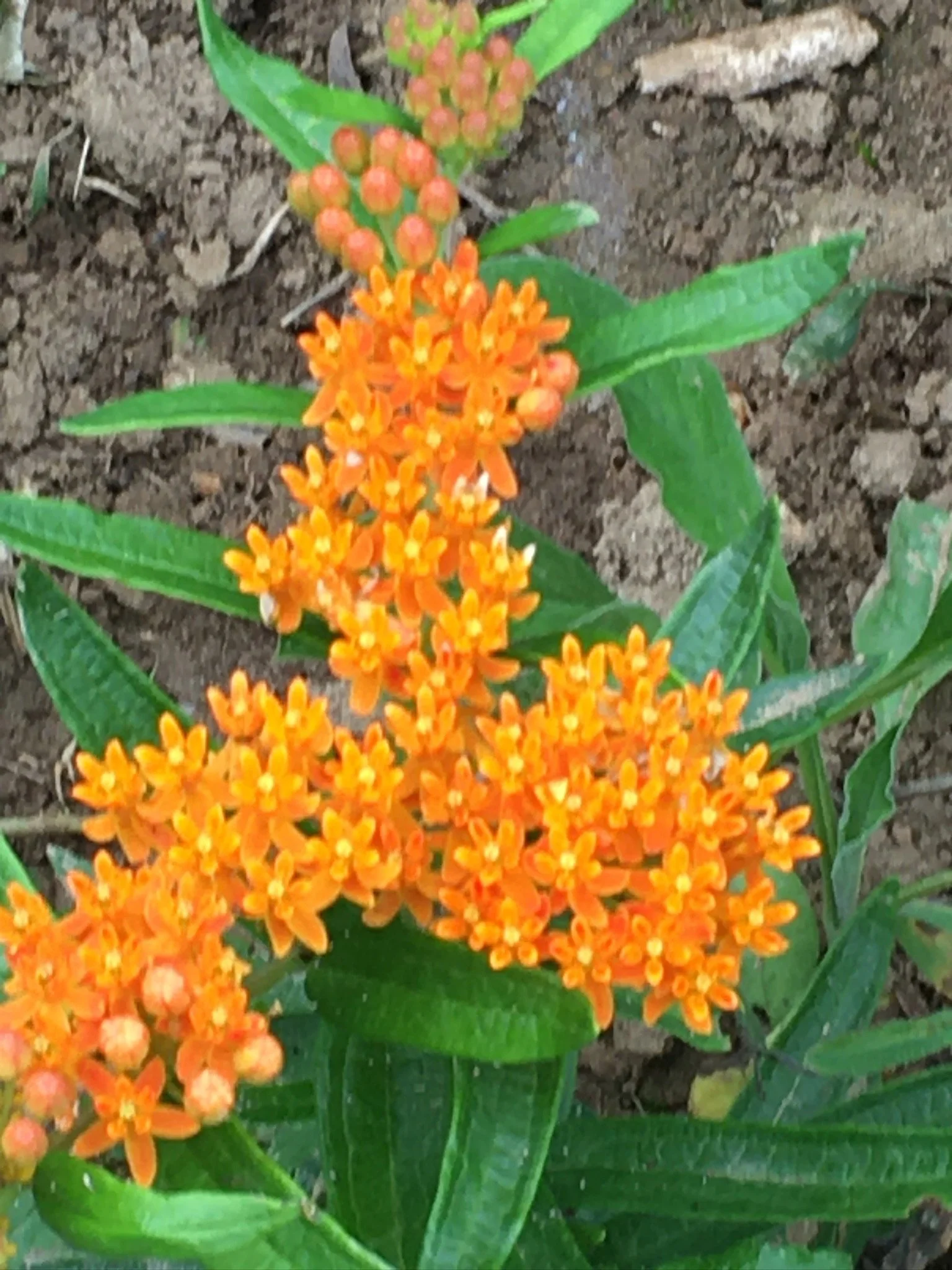
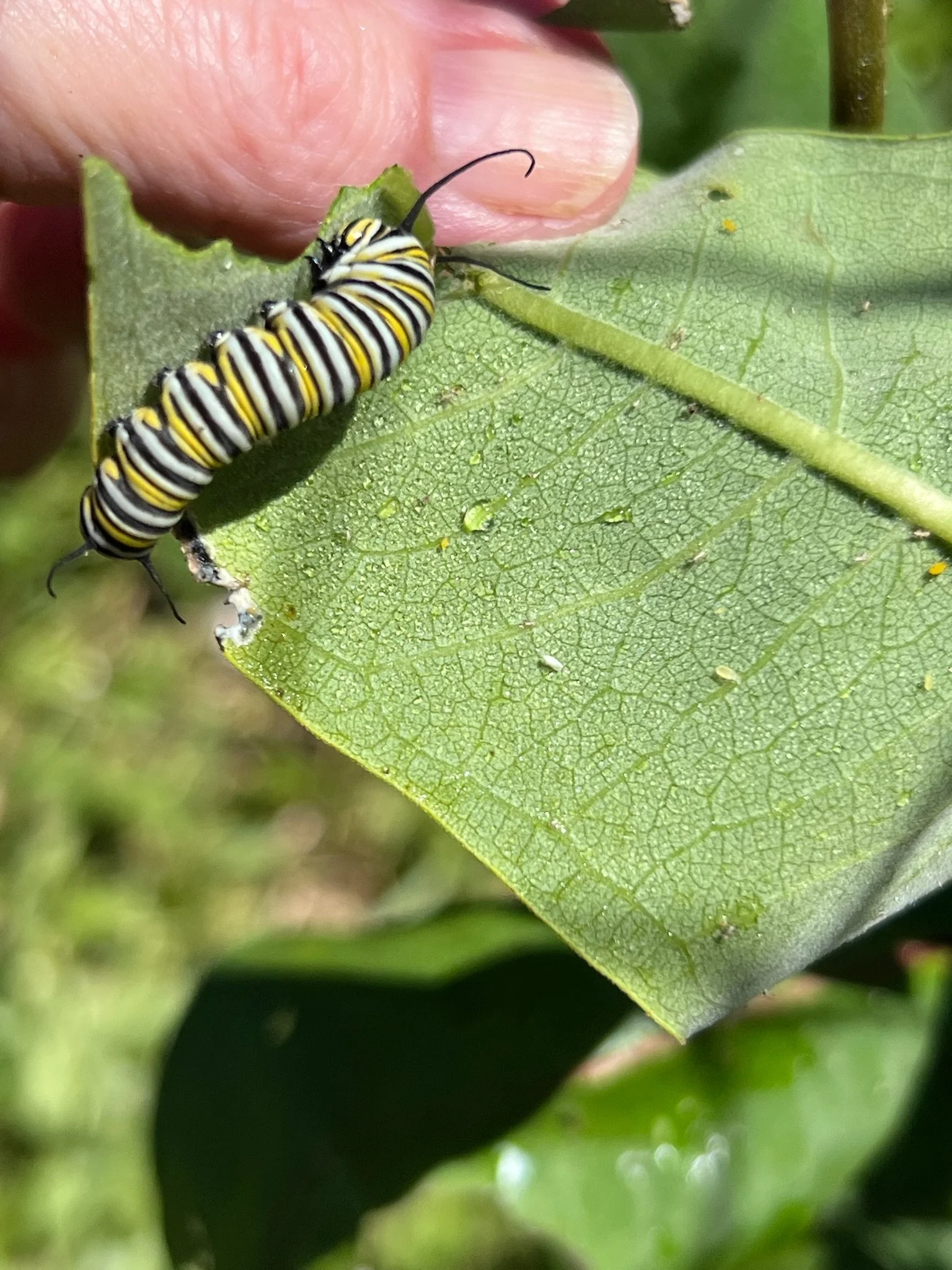
Milkweed is a vital plant in a Monarch Waystation because it is the only “host” plant for the monarch caterpillar, meaning the female monarch will lay eggs only on milkweed, and the emerging caterpillars can survive only by eating milkweed. Milkweed species grown in our region are common, swamp, and butterfly weed. Although tropical milkweed is grown, it is not recommended because it can interrupt the life cycle of the monarch. (Note: Buddleja davidii, common name Butterfly Bush, is NOT a milkweed and is not native to Maryland, and it is considered invasive in Maryland.)
Note for home use: The milkweed bloom is surprisingly fragrant and attracts a wide variety of beneficial pollinators, such as native bees, moths and other butterflies. When planting in a sunny home garden, pick the right spot for the right species. Butterfly Weed and swamp milkweed are attractive and do not spread rapidly, so they are good options for flowerbeds. Use common milkweed in places where its rhizomes can spread naturally.)
It is also a good idea to plant “host” plants for different butterfly species. For a list of host plants, Click Here
A Monarch Waystation also includes a “puddling” area where butterflies can hydrate. A shallow dish, filled with clay/soil, rocks and water will do the trick.
The following links detail how to create a Monarch Waystation and list examples of the most popular, recommended native plants:
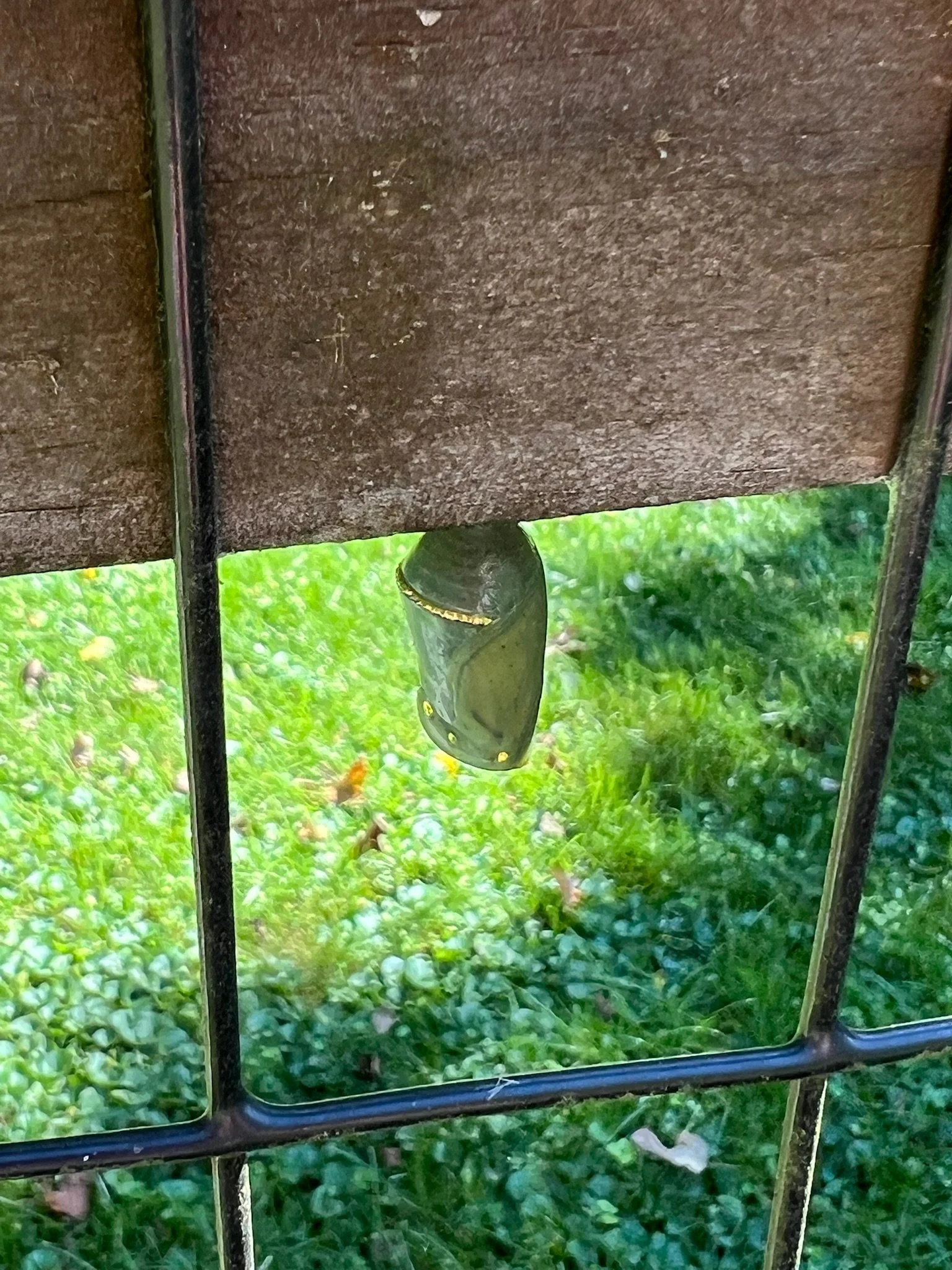
The eastern North American monarch population migrates annually between Mexico and Canada, moving to the north in the spring. As monarchs fly north, they stop along the way to feed on nectar plants and lay eggs on milkweed, their sole host plant. Eggs hatch into caterpillars (larvae) in 3 to 5 days. Over the next 2 – 3 weeks, the larvae feast on milkweed, shedding their skin 5 times (stages known as instars), before pupating into a beautiful, emerald-green chrysalis. When the chrysalis becomes translucent, a new monarch butterfly emerges and the cycle begins anew. During this journey, there will be four different generations of monarchs. The 4th and final generation will make the long migration back to Mexico to overwinter. Fourth generation monarchs migrate through Maryland from September through October.
Watch a new monarch emerge from its chrysalis in this video
Most common milkweeds native to Maryland:
- Common Milkweed (Asclepias syriaca)
- Swamp Milkweed (Asclepias incarnata)
- Butterfly Weed (Asclepias tuberosa)
Most common goldenrod native to Maryland:
- Canada Goldenrod (Solidago canadensis)
- Tall Goldenrod (Solidago altissima)
- Rough-stemmed or Wrinkleleaf Goldenrod (Solidago rugosa)
A short list of native Maryland perennial flowers:
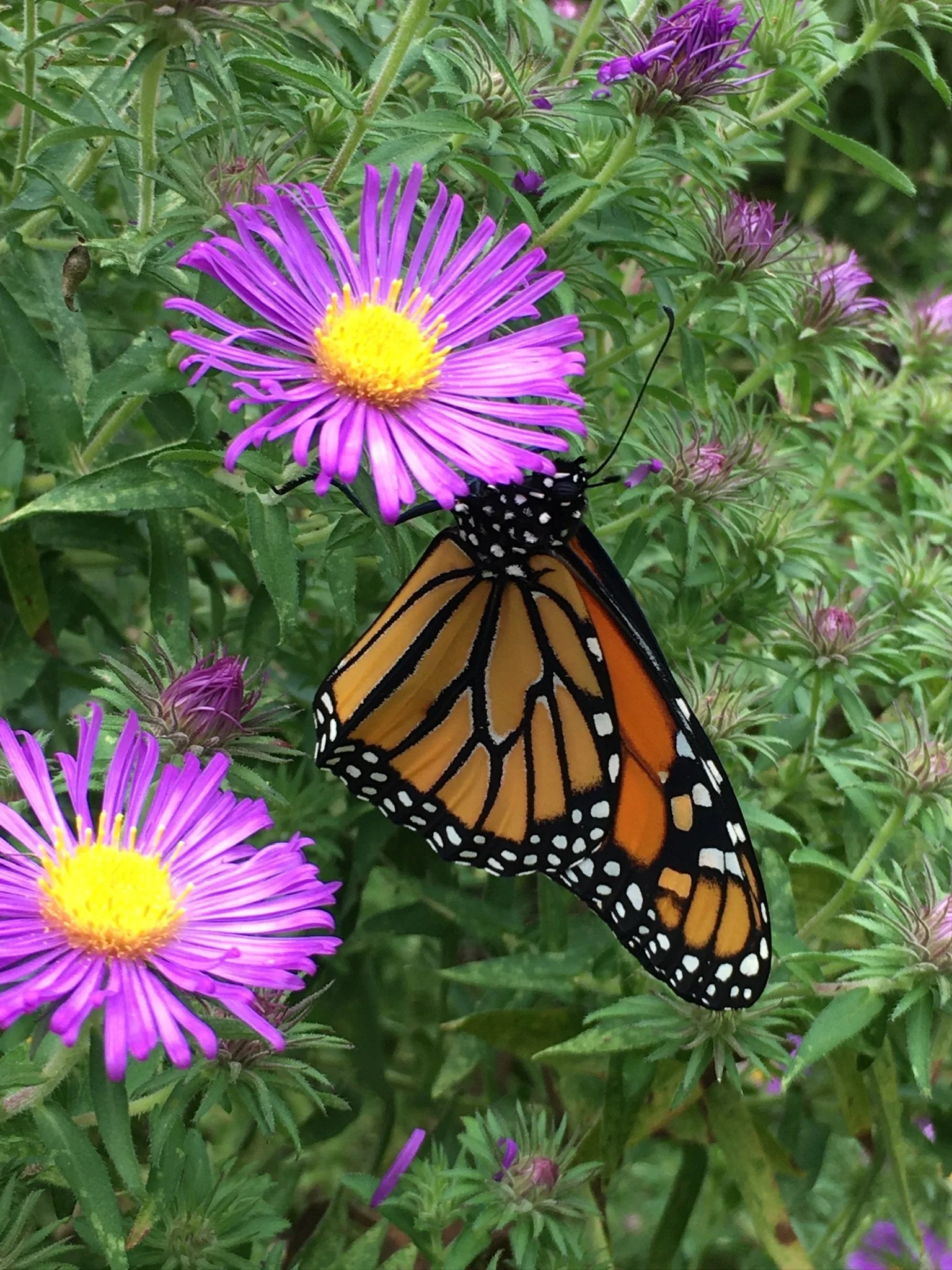
- New England Aster (Symphyotrichum novae-angliae)
- Black-eyed Susan (Rudbekia hirta)
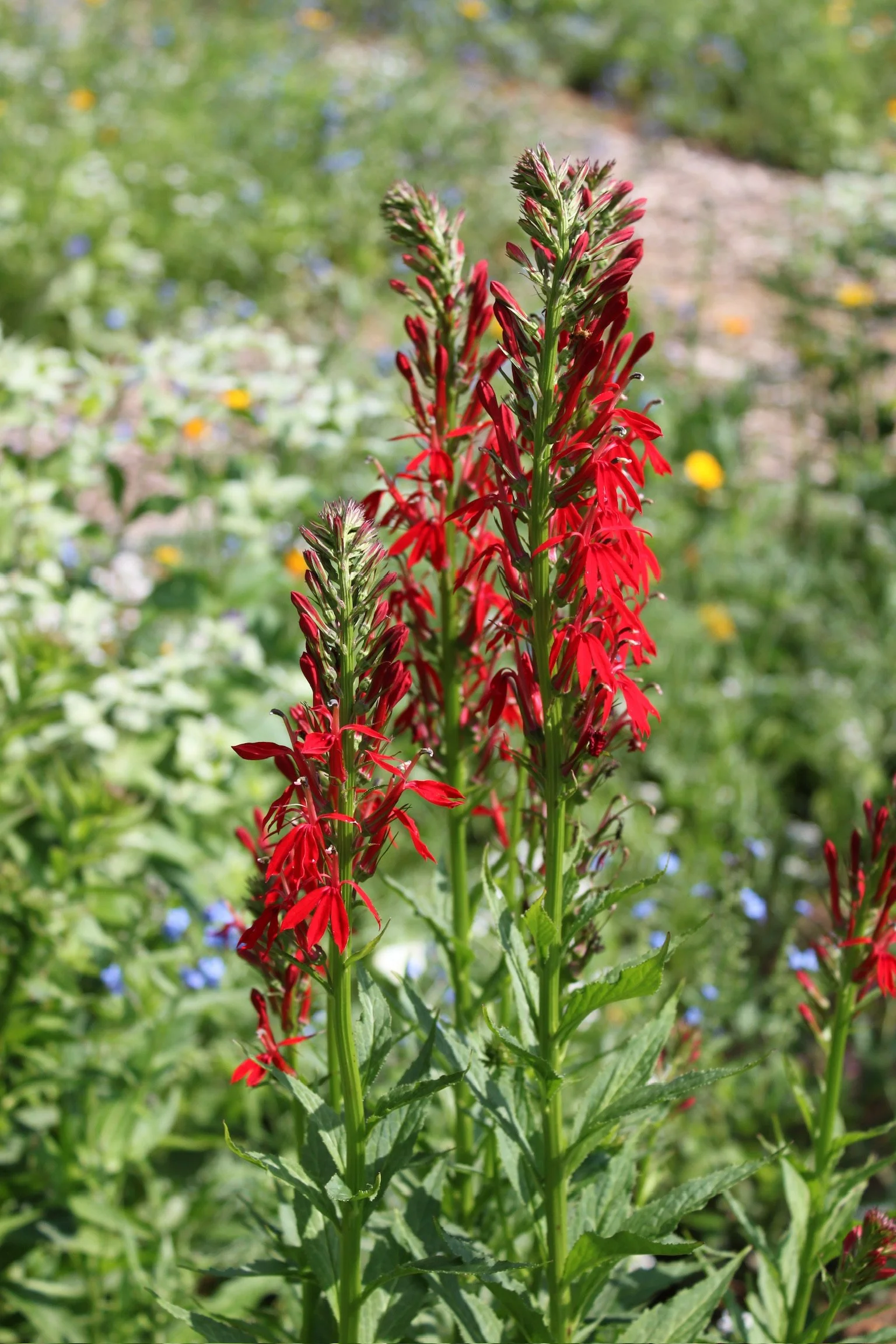
- Cardinal Flower (Lobelia cardinalis)
- Golden Alexander (Zizia aurea)
- Ironweed (Vernonia fasciculata)
- Joe Pye Weed (Eutrochium purpureum)
- Gayflower or Blazing Star (Liatris)
- Mistflower or wild ageratum (Eupatorium coelestinum)
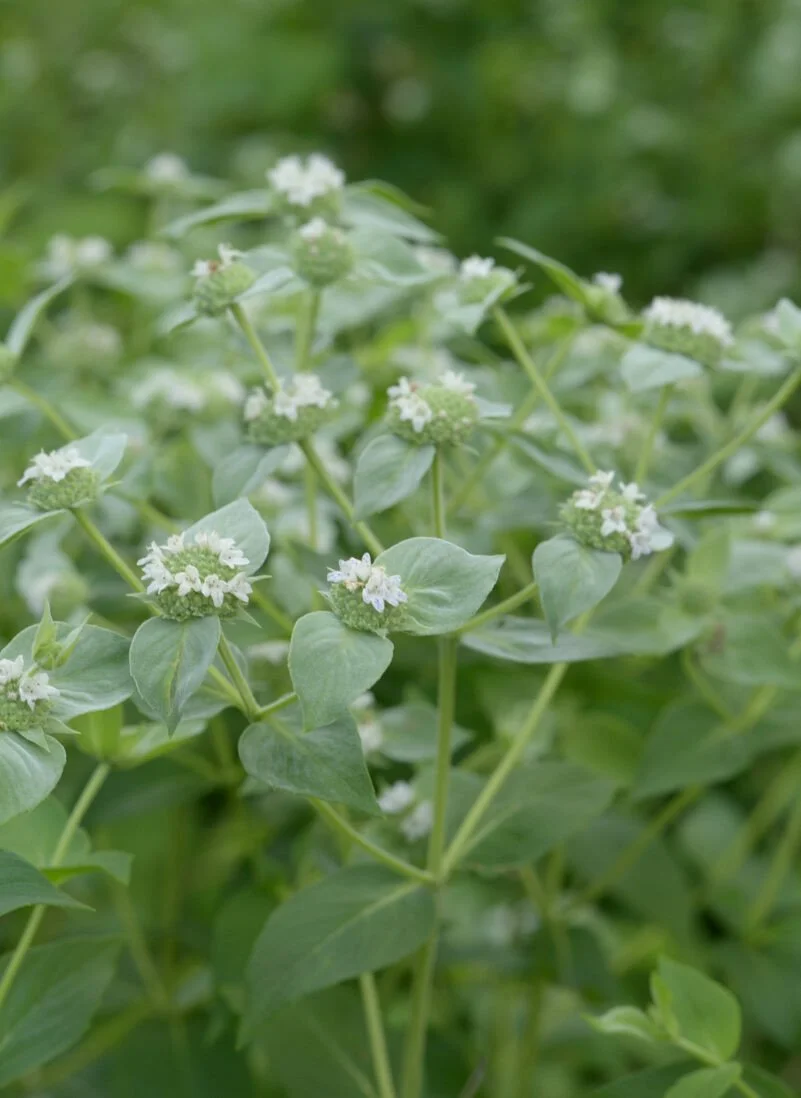
- Mountain Mint (Pychanthemum muticum)
Annuals and herbs recommended in Maryland:
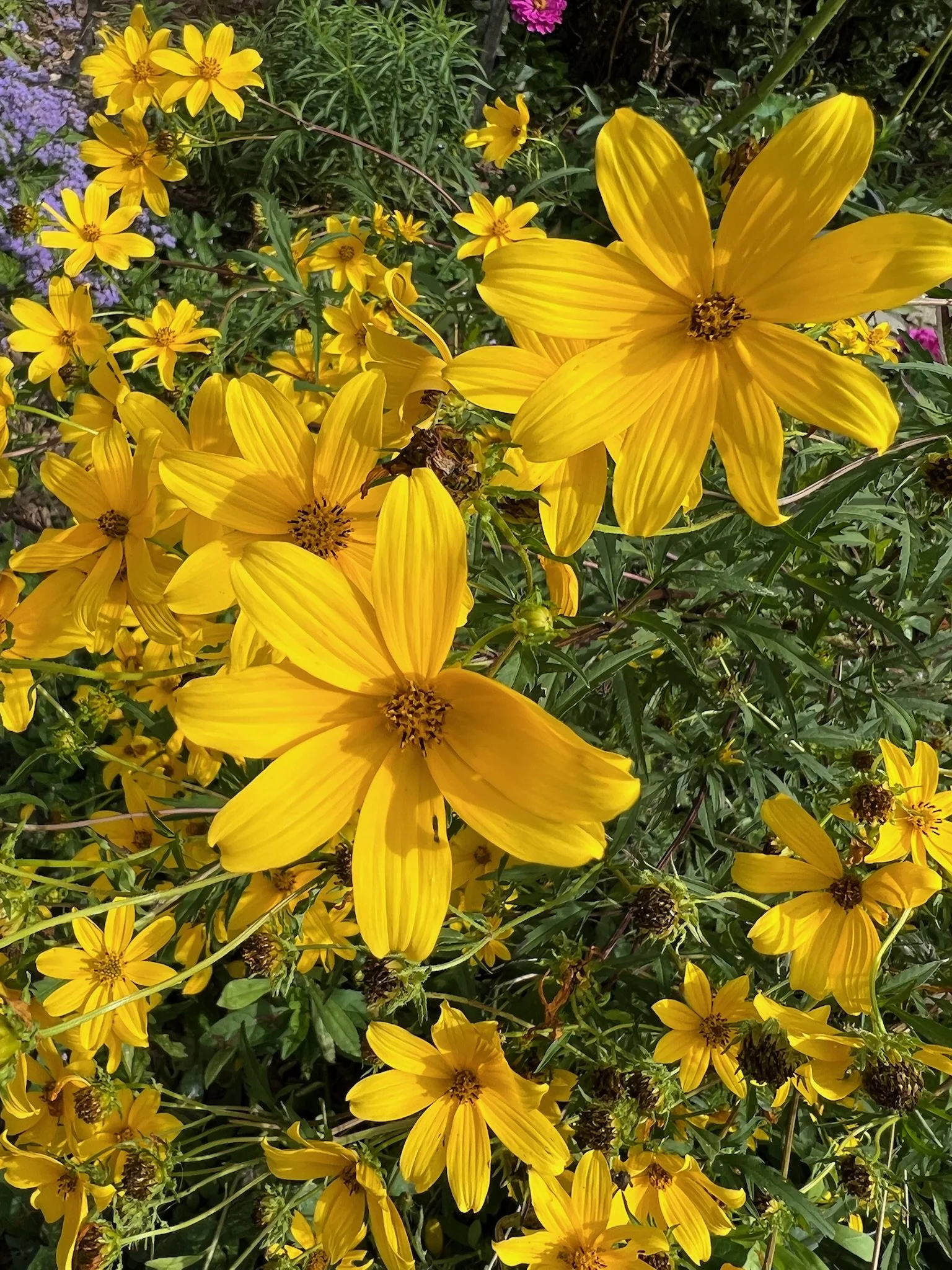
Annuals/biennials: cleome, cosmos, marigolds, petunia, salvia, zinnias, Mexican sunflowers Herbs: cilantro, dill, fennel, parsley
To see the Maryland DNR’s comprehensive list of Maryland native plants, visit:
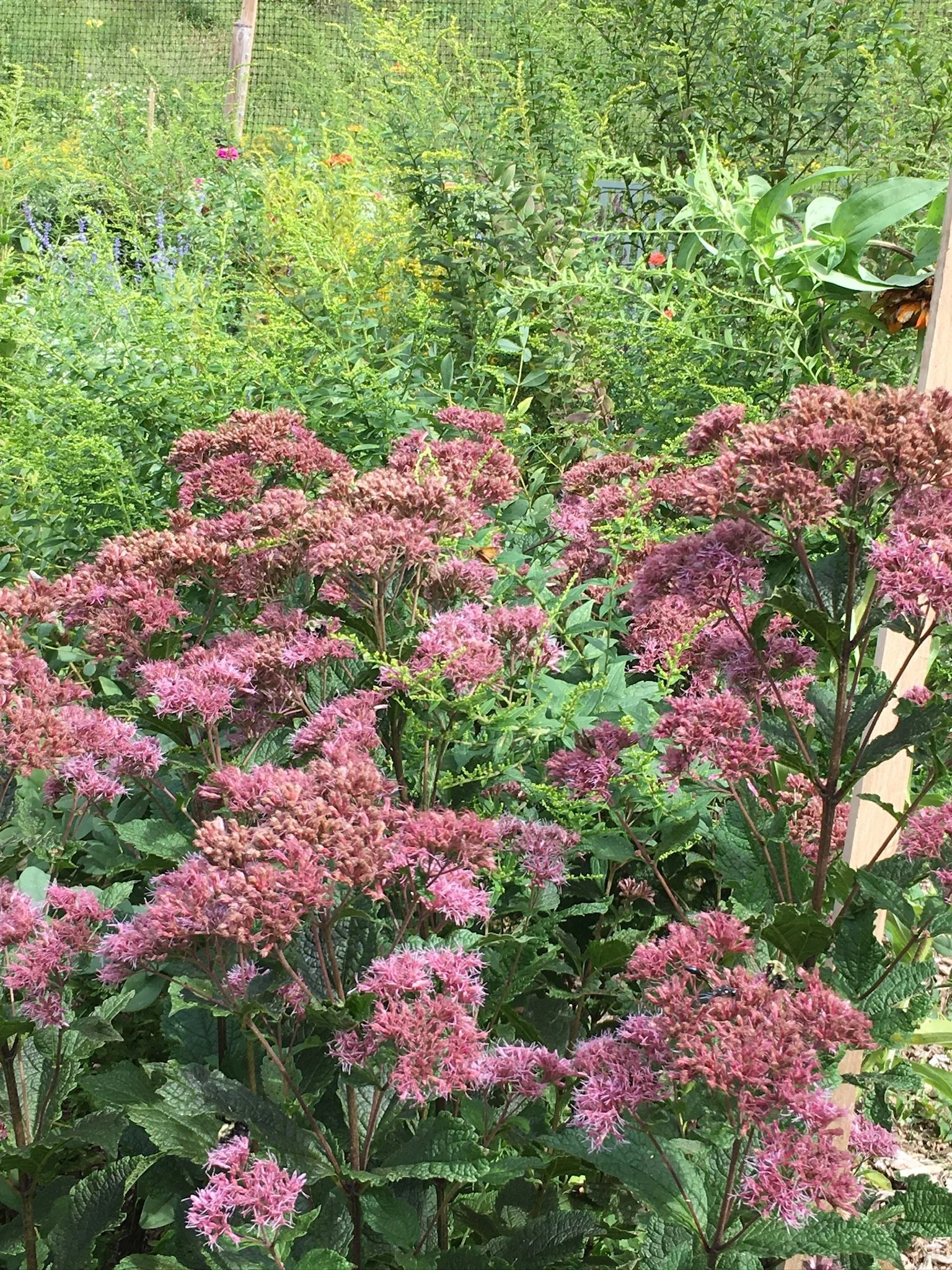
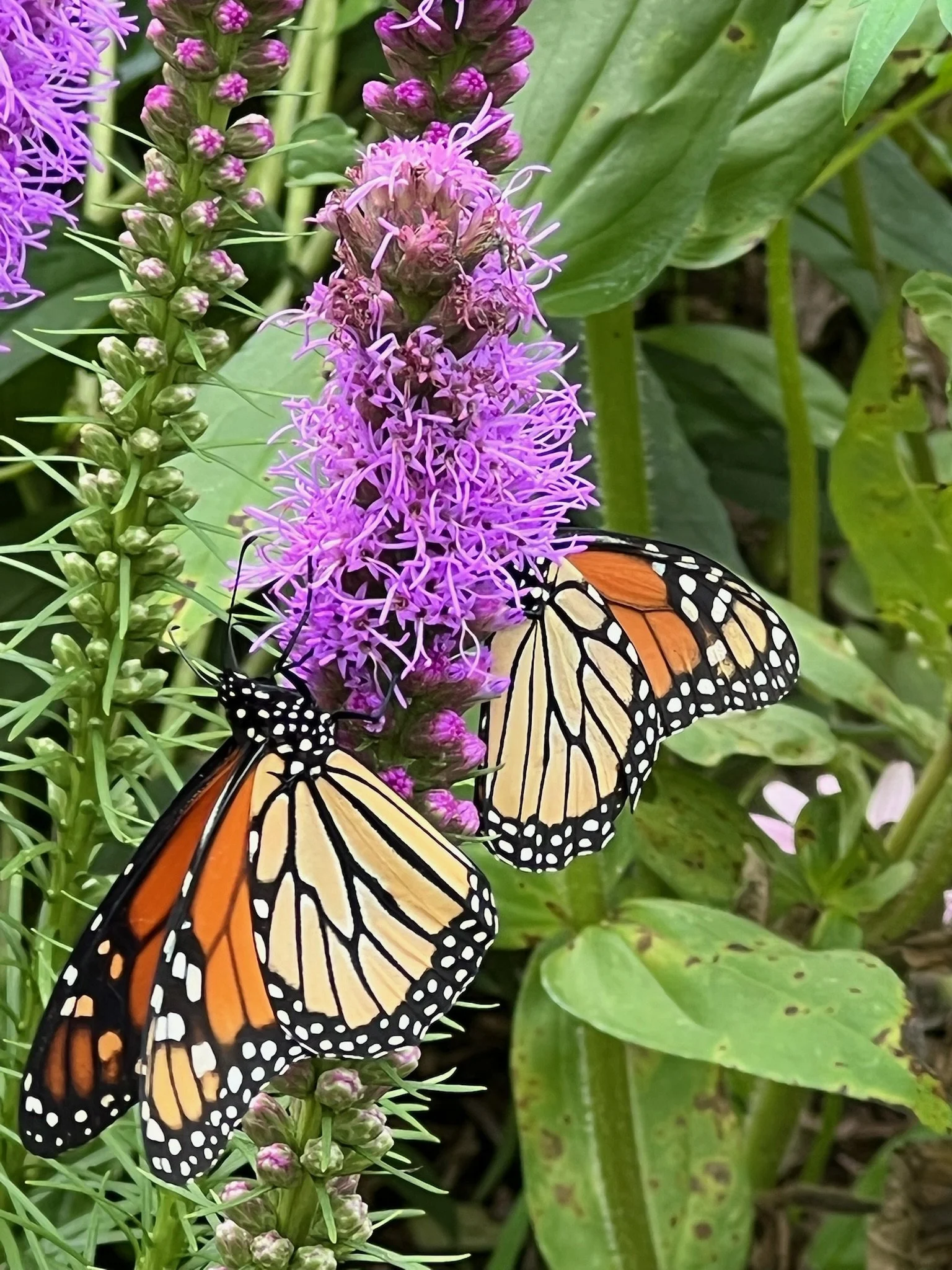
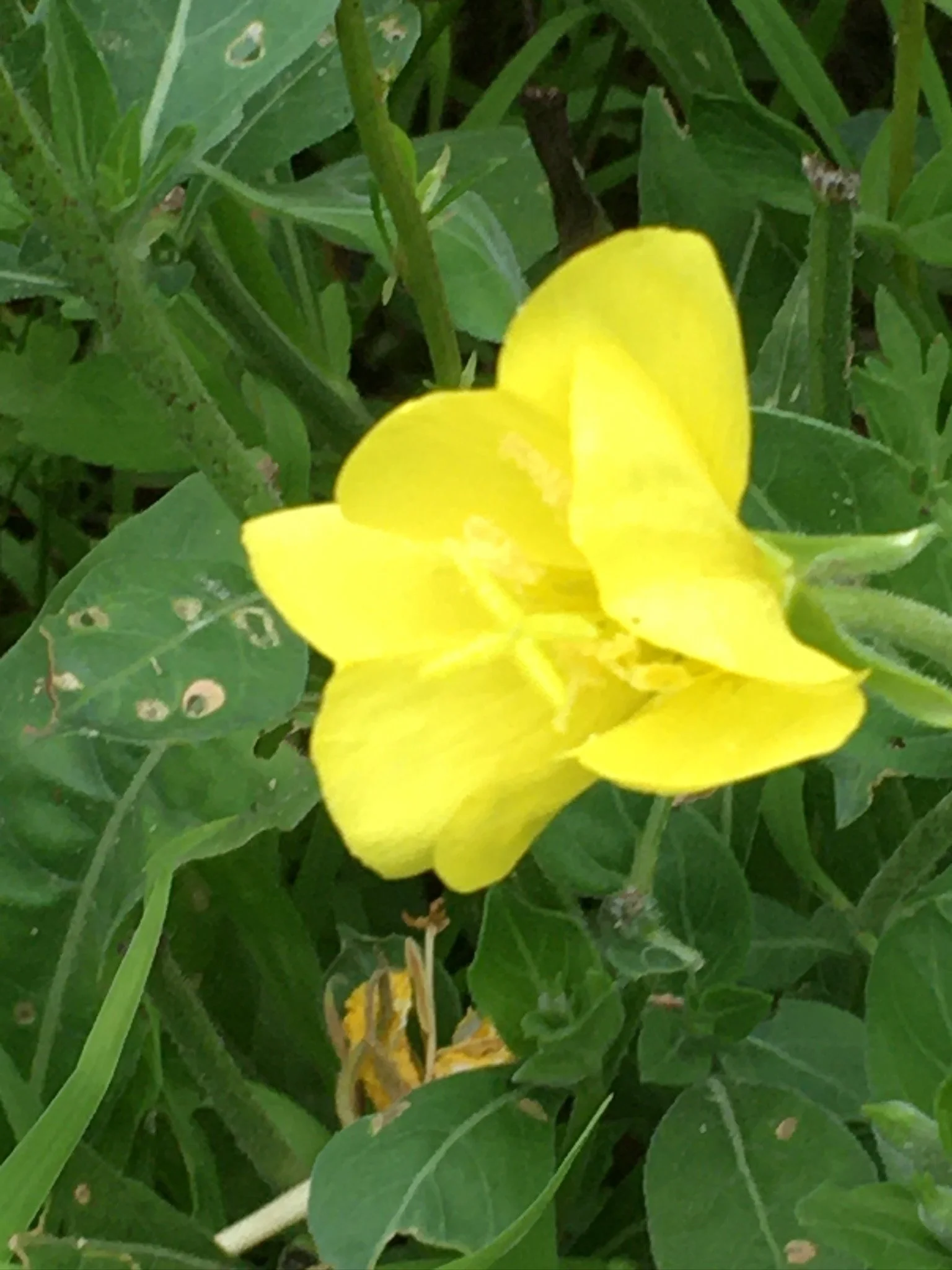
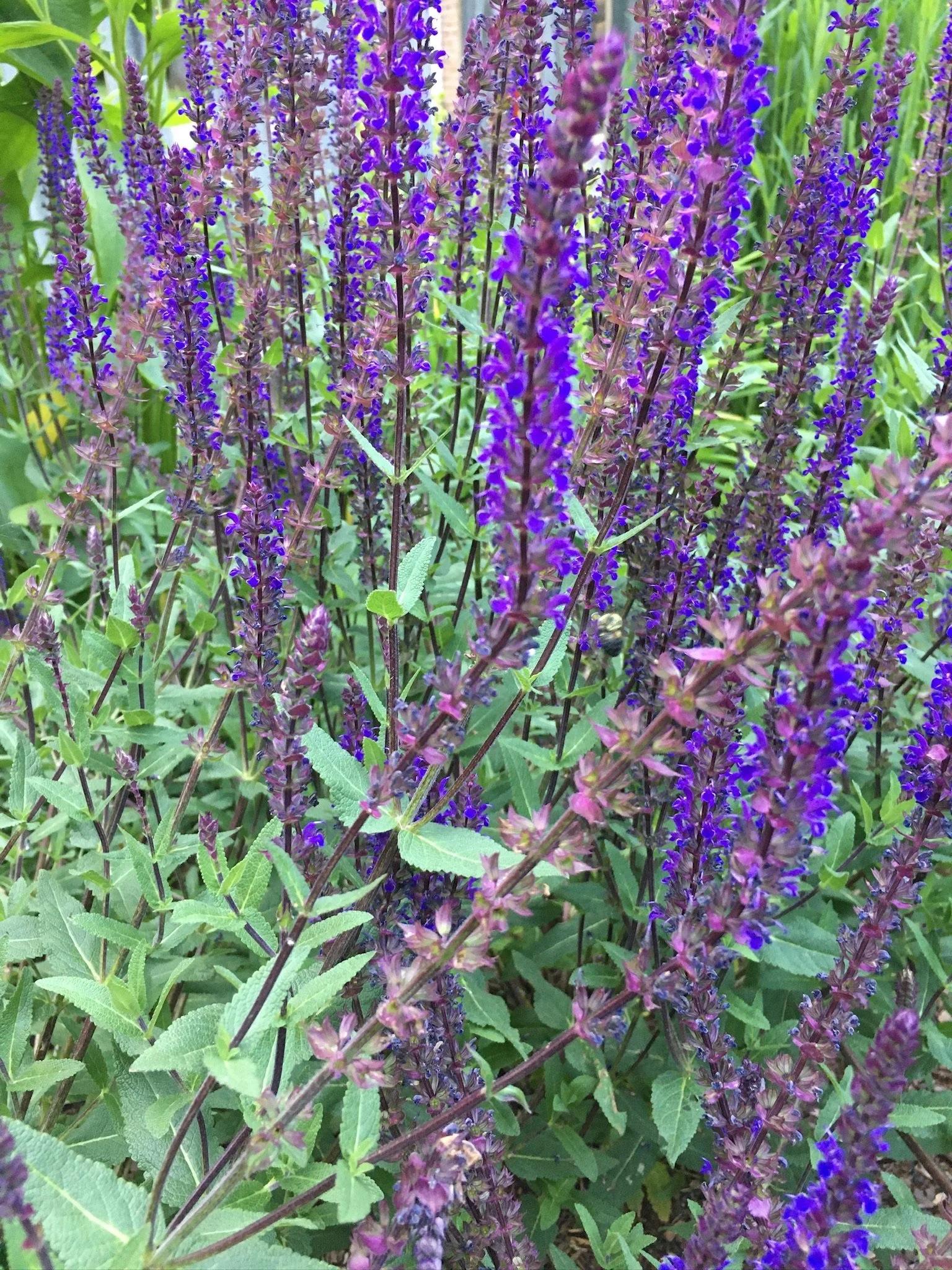
Becoming a Creation Care Ministry
From the beginning, we envisioned incorporating native plants throughout the entire acre of overgrown meadow surrounding the Monarch Waystation. In 2023, we began transforming the acre that surrounds the Monarch Waystation into a pollinator meadow by seeding and transplanting hardy, deer-resistant plants from the garden. While we had some success, it became clear in 2025 that we needed to use a herbicide, carefully applied by a professional, to kill certain invasives, followed by a mass seeding of perennials in the fall of 2025 and colorful annuals in the spring of 2026.
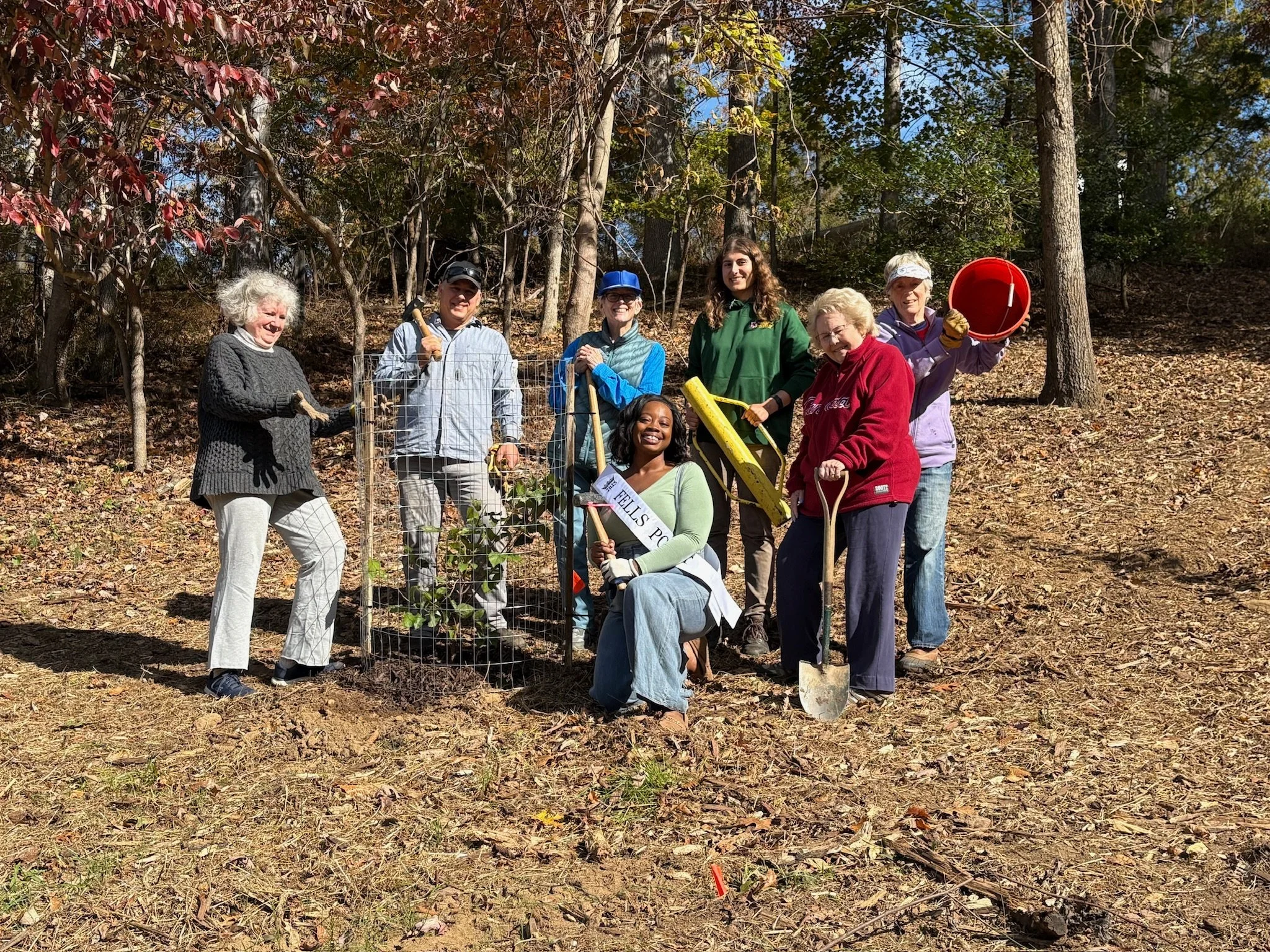
Additionally, in 2023, we became a congregational member of Interfaith Partners for the Chesapeake (IPC). We evolved into a Creation Care Ministry, staying in step with the environmental goals of Maryland, the Chesapeake Bay, and the broader world. We are working to restore much of the church property to Maryland native plants that support the well-being of the flora and fauna that inhabit our property. We began working with IPC’s “Trees for Sacred Places” program (a collaboration with the Alliance for the Chesapeake Bay) and the “Healthy Forests, Healthy Waters” program, a collaborative initiative between the Alliance for the Chesapeake Bay, the Maryland Forest Service, and the Maryland Forestry Foundation. Both of these programs provide free Maryland native trees and shrubs to organizations taking steps to eliminate tough invasive plants (privet, autumn olive, barberry, etc.). Through a process known as “forest mulching,” we were able to quickly eliminate large sections of invasive plants. With the help of IPC and the MDNR, we have begun incorporating native trees and shrubs, and will continue this effort, adding ferns, ground cover, and other natives to discourage the regrowth of invasive plants.
For more information about Interfaith Partners for the Chesapeake
For more information about Healthy Forests, Healthy Tree
To learn about forest mulching
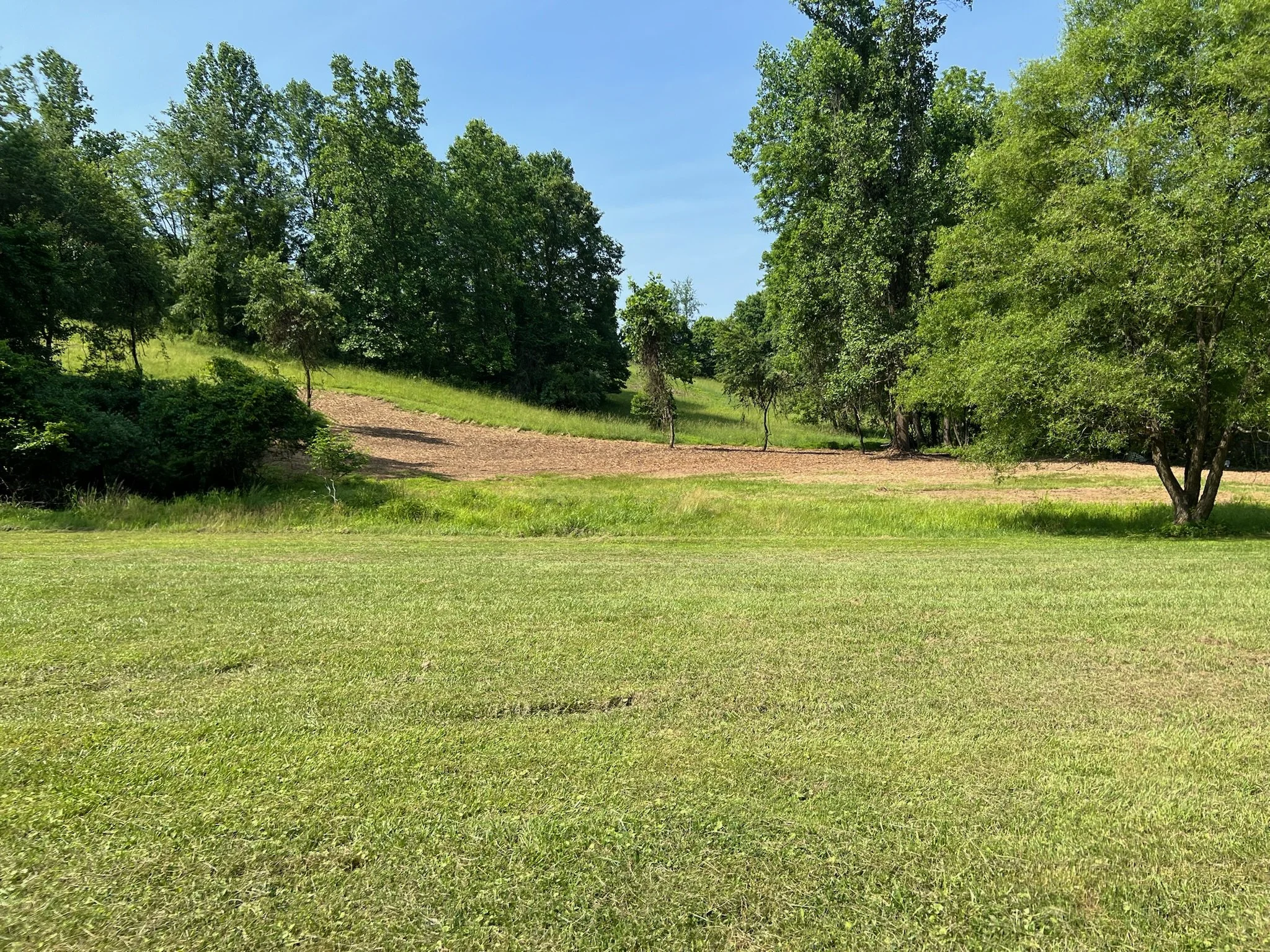
Before: Land Prior to Removing Invasives
Key Land Management clearing Privet and other invasive bushes for native tree and shrub planting.
After: Invasives Removed
Lessons We Have Learned
The primary lesson this project has taught us is that the most important things in life are the people who share our journey and the obstacles we overcome together. Creation care takes a tremendous amount of research, discussion, physical effort, and time. Working to transition land from prior agricultural use to a vibrant ecosystem that nurtures a wide-range of native plant, insect, and animal species is an investment for the future, not a weekend project. It truly takes a community to facilitate regeneration.
We’ve made, and will continue to make, mistakes during our journey, but we learn so much from every misstep.
Learn From Our Experience
Know your natives
During our very first planting, we spread a pollinator seed pack that, unknown to us, contained the seeds of a number of invasive, non-native plants that we are still weeding out. As a result, we learned to be very selective in what we plant. It is important to know which plants are native to your region and your state.
Protect your garden properly
Our original fence was chosen for practical and aesthetic reasons: it was simple, it was inexpensive, and it was unobtrusive. The deer and other critters quickly learned to breach the lovely fence, teaching us that it was also ineffective. After field trips to see other garden fences, followed by much discussion, we replaced it the next year with a more effective Critter Fence.
Change is inevitable
Each season, we learn more about which Maryland native plants work best in our specific location. Some plants have consistently grown so well inside the garden that we have divided and planted them in the meadow that surrounds the waystation. Other plants that thrived one season failed to return in the following seasons. Surprisingly, we learned that each quadrant has its own micro-ecology. A plant that thrives in quadrant 1 may fail in quadrant 4. And each season, the garden is different, with past top bloomers going dormant, while others steal the show.
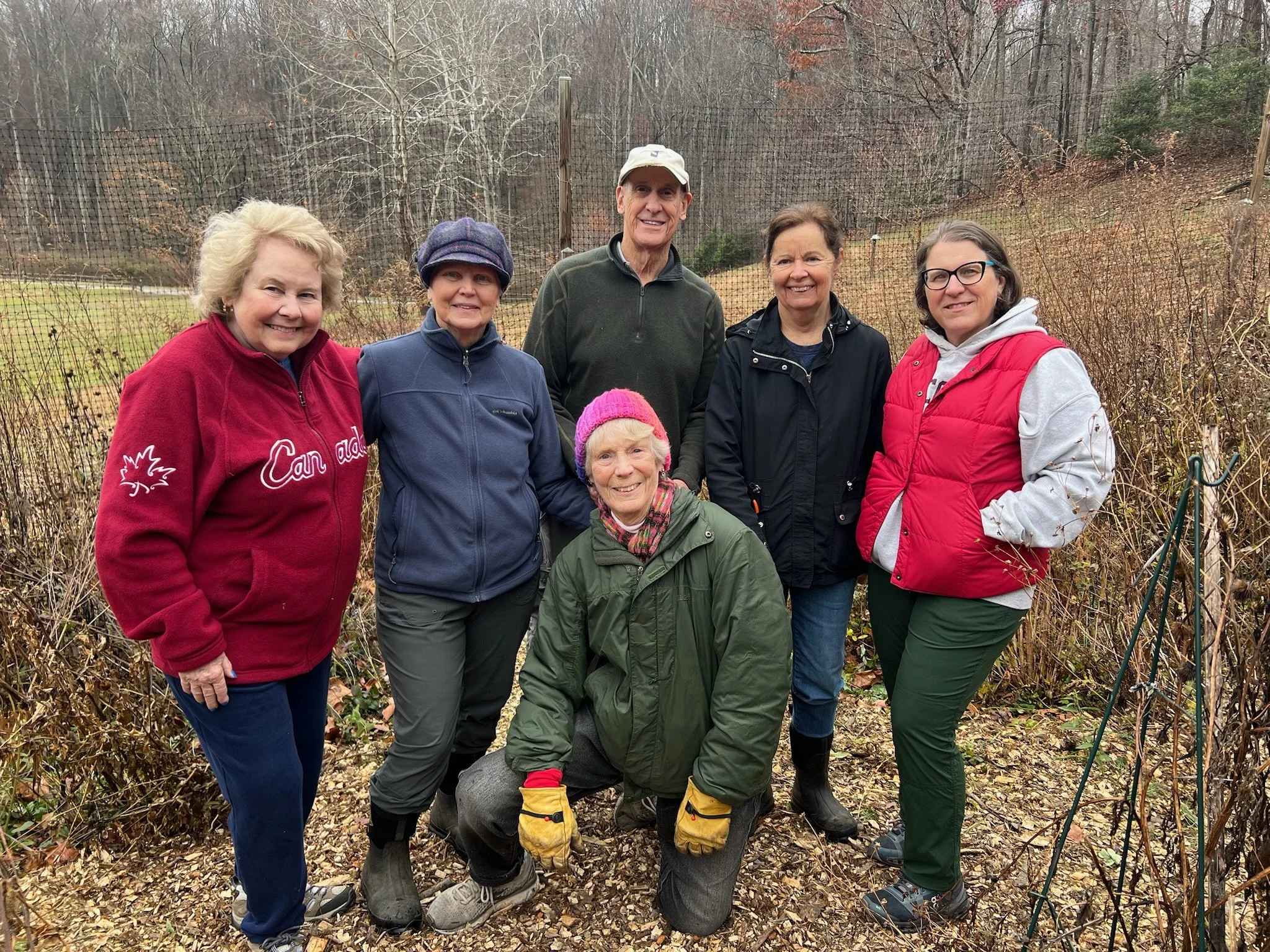
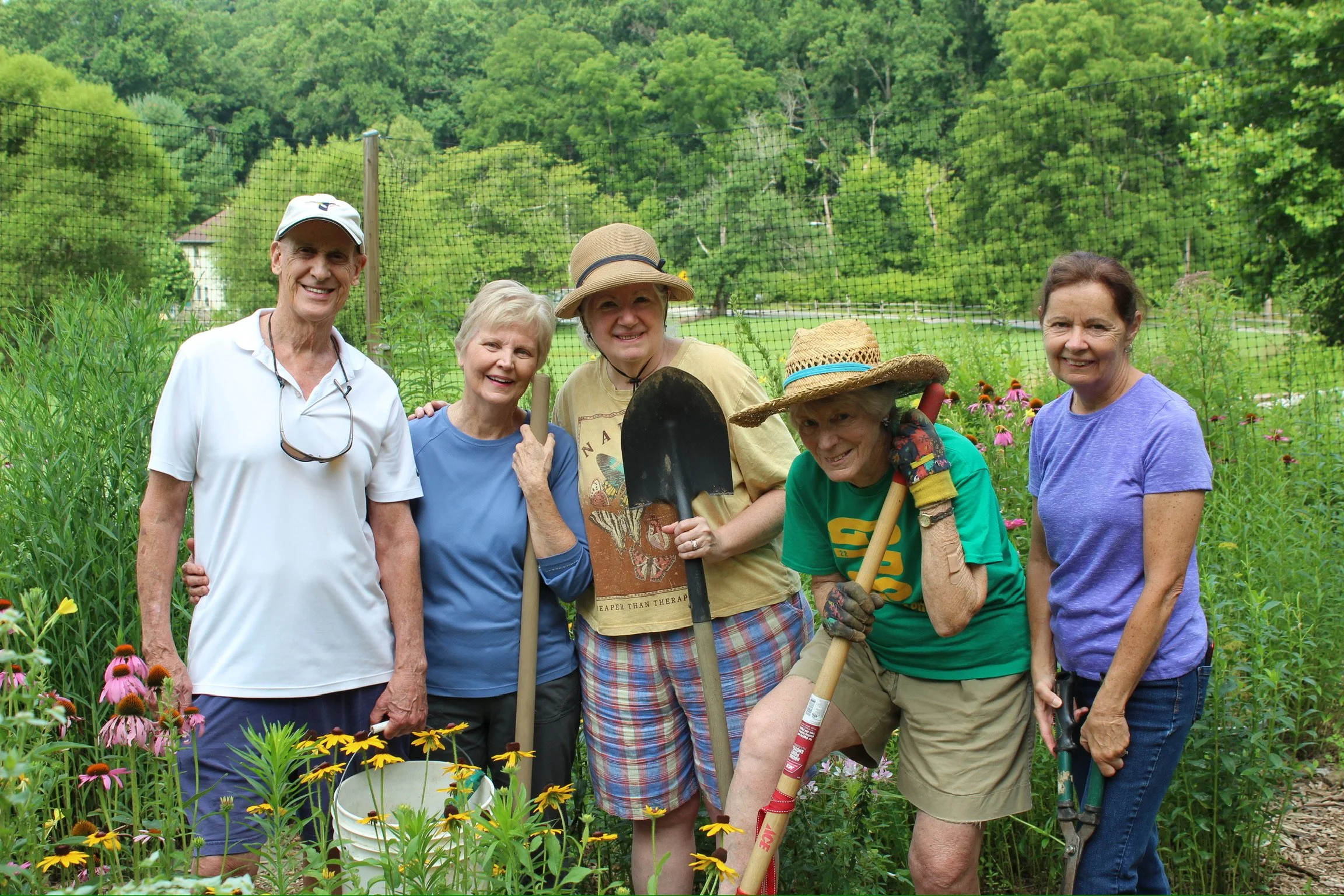
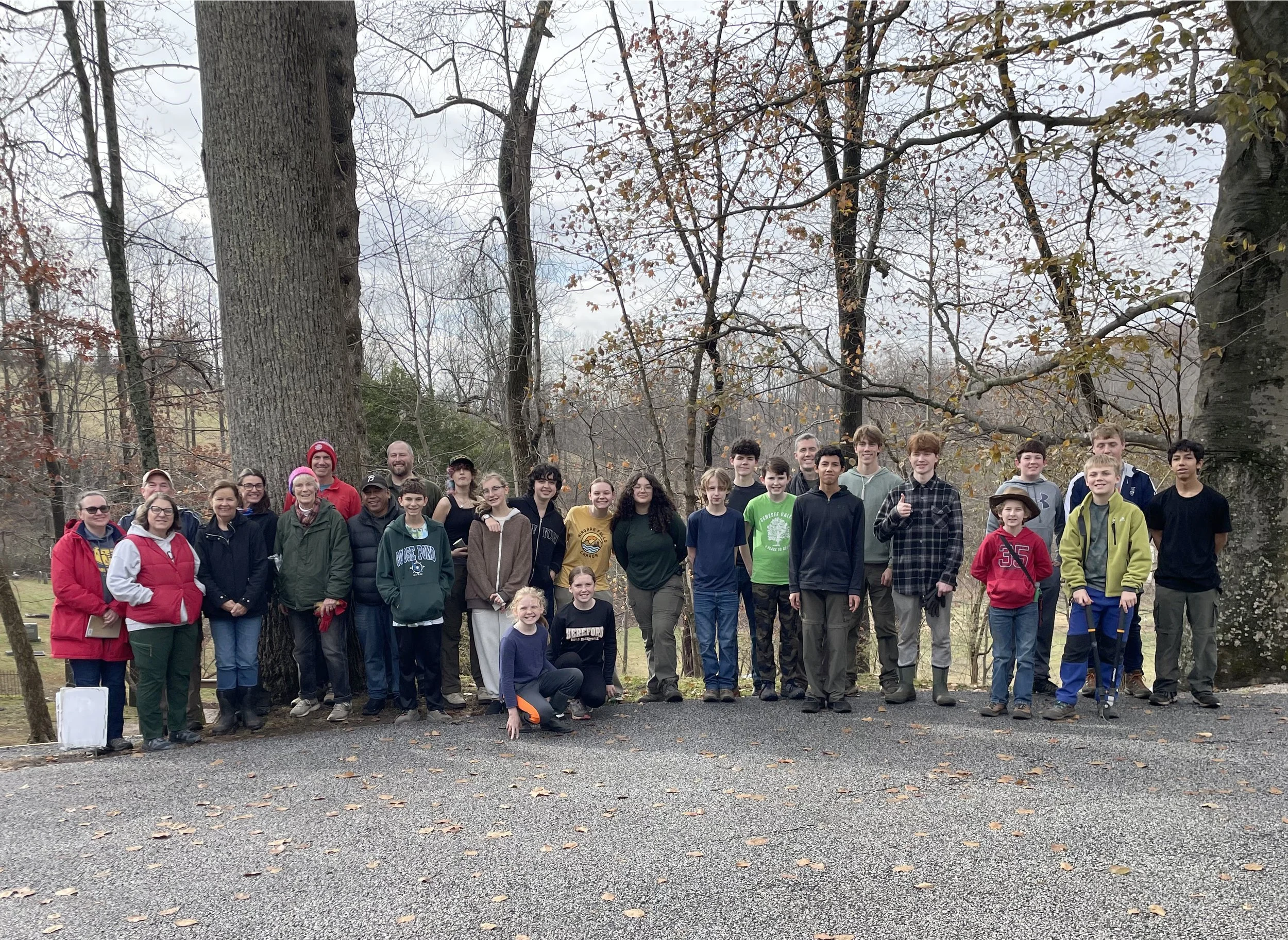
Creation Care Takes a Community
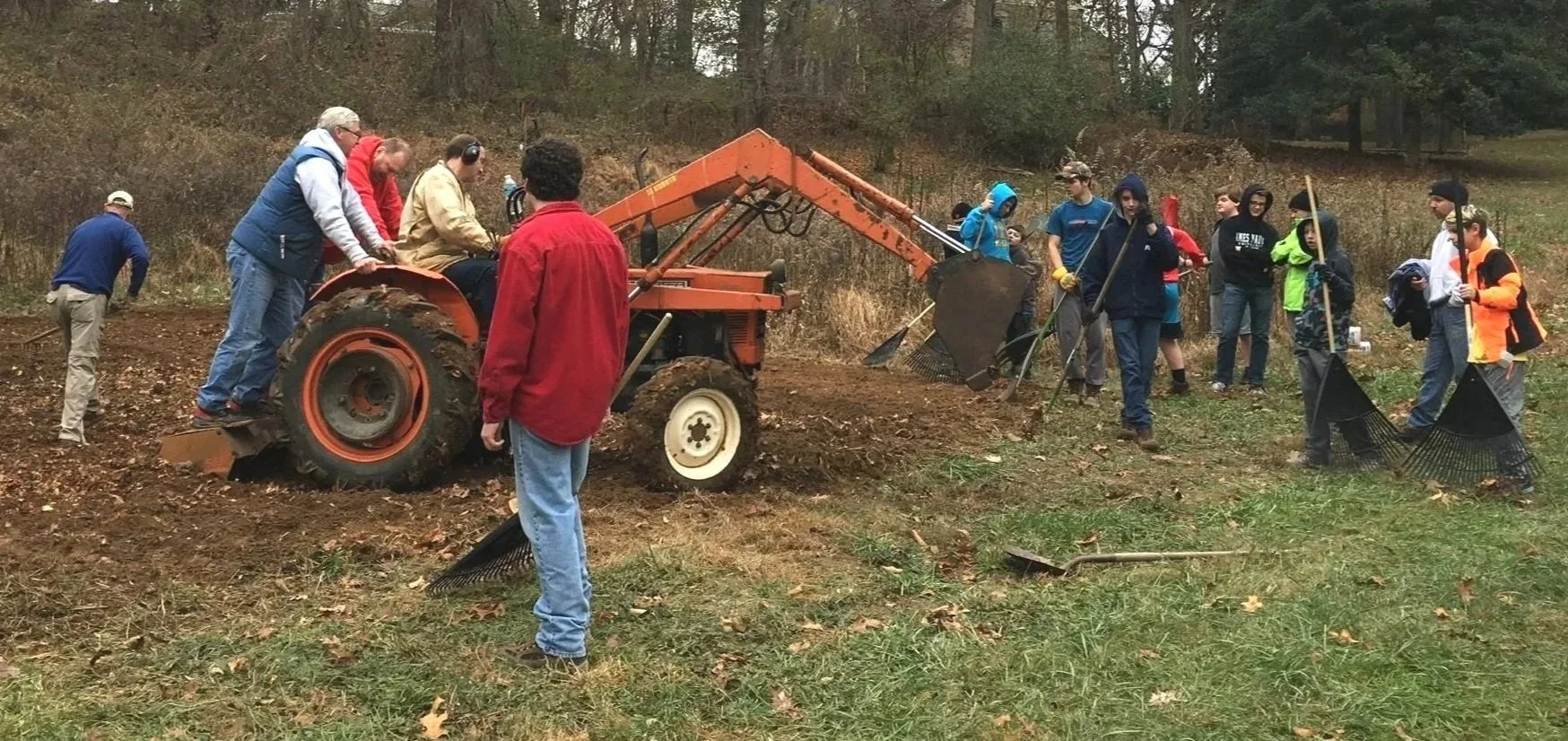
Throughout this project we have met many generous and knowledgeable people who freely shared their expertise, time, and labor.
While not everyone agreed on every approach, those conversations strengthened the project and helped refine our vision.
This work would not be possible without the dedication of the Monarchs of the Glen team, local Scout troops and families, Oldfields School students and staff, and many friends and parishioners who have supported the project through time, expertise, labor, and financial contributions.
Here is information about Scouting at Immanuel.
Contact Us to Volunteer or Donate Native Plants
To volunteer or donate native plants, complete this form, we will get back to you. Thank you
How You Can Help
Donations:
Monetary donations can be made to:
Immanuel Episcopal Church, Monarchs of the Glen
509 Glencoe Road, Sparks/Glencoe, MD 21152
Support Pollinators at Home
You can help monarch butterflies and other pollinators by adding native plants to your home garden.
Planting milkweed and other host plants allows you to observe the remarkable life cycle of pollinators—from egg to caterpillar to chrysalis to butterfly—right in your own backyard.
It is a small act that contributes to a much larger ecological restoration.
Volunteers & Supporters: Creation Care Ministry
Monarch Waystation:
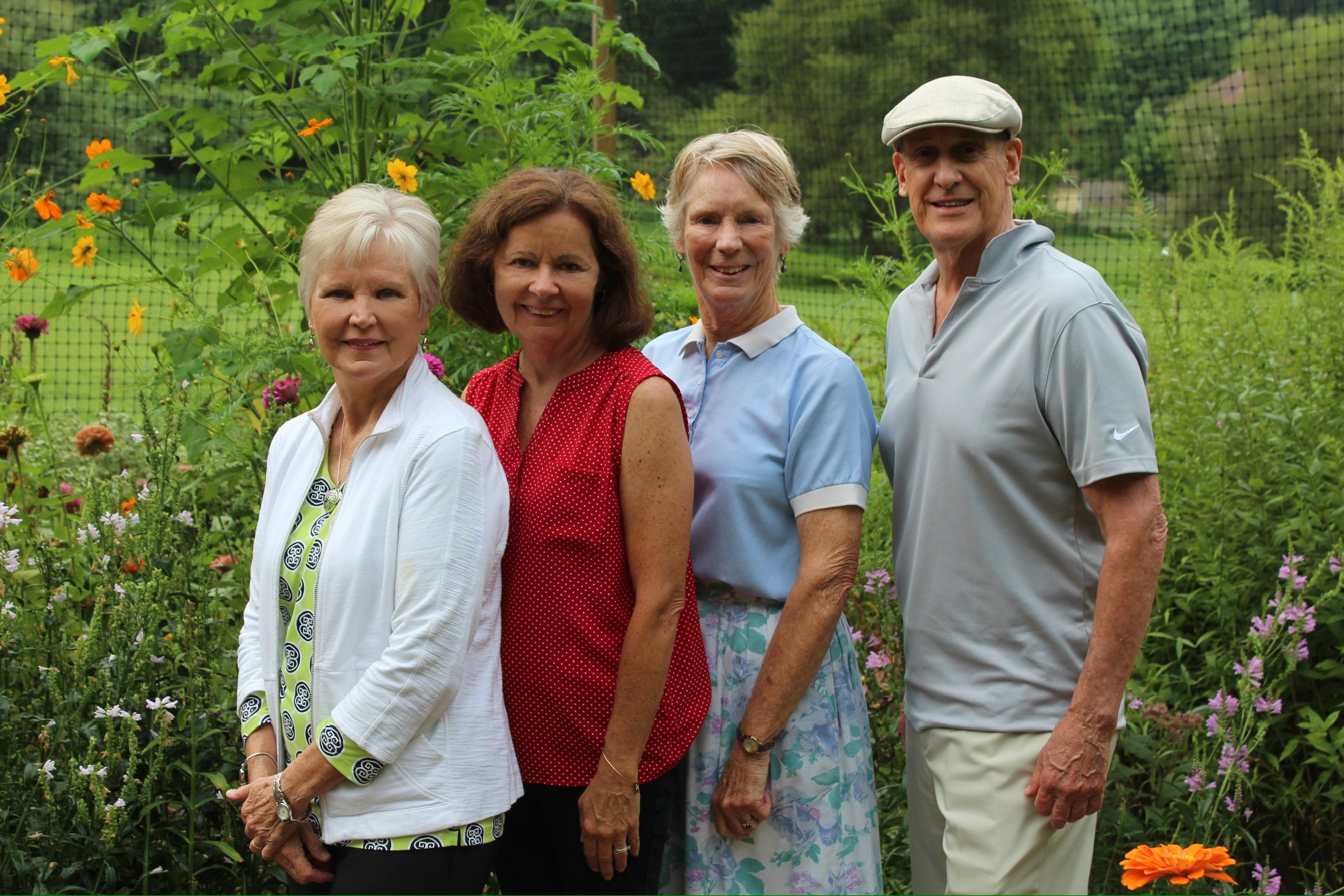
Current Monarchs of the Glen Team (MOGS): Linda Ambrose, Susan Brown, Susan Foulk, Claudia Horner, Rudi Horner, Ashby Shanks, Mary Jane Shanks
Others who have made important and timely contributions: Michele Atkinson, Heather Brack, Susan Dowell, Noby Powell, Darcy Turner
Creation Care for Immanuel Campus
Current Creation Care Members: Oldfields students with Larry Foulk, Shawn Mahonski, MOG Team
Ongoing Support from Scouting America Troops:
Scouting America Troops 485 and 1485 and their leaders and parents
Cub Scout Pack 1485 and their leaders and parents
To learn more about the Scouts at Immanuel
Funding:
Maryland Agricultural Resource Council Grant
Jeanne Dodds and The Endangered Species Coalition
Members of MOG Team
Harry and Tara McDonough
The Rev. Megan Stewart-Sicking
Peggy Taliaferro Estate
Darcy Turner
Others:
Balducci Stoneyard – Donated stone for meditation and MOG gardens
August Bubier – Eagle Scout who built the original fence and kiosk
Joe Chadwick – Endangered Species Coalition tip
Alan Covens – Advice, donated common milkweed and horse manure
Charlie Devilbliss – Spread seed in the meadow
Key Land Management - Donated time and machinery
Susan’s Annuals – Donated annual flowers
Tim Mettee – Mowing and supplies
Parishioners of Immanuel Episcopal Church
Consultants:
John Canoles
Kirk Dreier
Pascale Meraldi
Pam Spencer
Winny Tan
Gary Walton
Master Gardeners: Delores Ciufo, Judy Felton, Peggy Funk, Josh Fuller, Pat Ghingher, Susan King, Shari Malinow.
Interfaith Partnership for the Chesapeake'
Web Design:
Christine Shanks